

Summarize Content With:
Quick summary
This guide is not for the reader wanting to understand what phone automation is, it’s for the reader evaluating outbound calling software. For the foundational primer, see the guide to automating phone calls with AI.)
Buyers don’t have it easy, which is why marketing pages make it seem so easy. The outbound dialer that’s right for a 4-rep RevOps team is not right for a 90-seat collections floor. Predictive dialing will be banned when the abandonment rate exceeds 3%. Branded caller ID has a multi-vendor maze of CTIA-registered analytics providers. The FCC’s 1-to-1 consent rule went into effect in January 2025, followed a week later by its abandonment by the 11th Circuit, so it’s time to stop hearing “we handle TCPA for you” from any vendor without specifying the rule.
This guide lists the changes that affect the answer for an Outbound Buyer in 2026:
- Explain the 4 modes of dialers, and how to select — the pacing math, not just descriptions.
- Outbound deliverability – STIR/SHAKEN attestation, branded caller ID, Spam-Likely label remediation
- The rules and the changes to the rules — what you need to be compliant with in terms of TCPA + FCC + FTC.
- The delegation to list hygiene involves national and state DNCs, in-house DNCs, litigator scrubs, and wireless flagging.
- The key outbound metrics that matter are the ones you should follow: connection rate, agent occupancy, and FTC TSR’s 3% cap.
- To support the buyer, there is a framework of criteria, with varying weights based on size and use case.
The Four Dialer Modes: Pick The Right One Or Pay For It
All outbound software vendors have a mix of four dialer modes. The most frequent and costly call out error is choosing the wrong one. This is the table the buyer refers to:
| Mode | How it works | Calls per agent per hour | When it’s the right pick | Compliance ceiling |
| Predictive | Predicts next available agent with statistical pacing, dials multiple numbers before agent is available | 100–200 | These are also low-margin, high-volume sales for customer-to-customer or B2C sales (collections, telemarketing, fundraising). | The FTC TSR is 3% of live answers max for abandonment, which means math has to respect this or you risk having per-call penalties. |
| Power | Calls the next number when current number’s called out, 1:1 | 60–90 | The management of B2B inside sales processes, especially for medium volume transactions. | No limit on abandonment rate; No compliance issue with pacing maths. |
| Progressive | Dials when agent is ready; one-to-one agent control | 50–75 | If you are selling more than just a single B2B/B2C item, it is important to prepare the agents. | None, a full abandonment of the city is considered to be none. |
| Preview | Asks to see shows record + history prior to agent confirming dial | 25–40 | High dollar relationship calls (HNW account review, complex renewal, premium prospect) | None, agent reviews each record |
Most of the reasons for outbound automation come down to the productivity difference between manual dialing (30-40 calls/hour) and a properly-paced predictive dialer (100-200). However, legal pacing is a requirement of the productivity — and that conditional is one most software demos ignore.
The Predictive-Dialer Pacing Math (Why 3% Matters)
The FTC’s Telemarketing Sales Rule, 16 CFR 310.4(b)(4) mandates that when a call is answered by a person, and no live agent is available within 2 seconds, the call be transferred to a pre-recorded message identifying the seller and containing instructions for abandonment, and that the abandonment rate exceed 3% of all answered calls per campaign per 30-day period.
So if you have a predictive dialer set to dial 4 lines per agent, and you have a high abandon rate, you will be facing per violation penalties (as much as $51,744 per violation, per the FTC, as of 2024, with annual adjustments for inflation). The abandonment math also restricts the maximum size of the multiplier you can run, usually 1.5× – 2.5× lines per agent in healthy calling, occasionally even less.
If the predictive dialing vendor you are buying from cannot provide you the dashboard for the abandonment-rates, the pacing controls for per-campaign and the auto-throttle when you hit the ceiling, then you are buying a compliance liability. Request it during the demo!
The Outbound Deliverability Stack (The Part That Vendors Don’t Mention)
A clean list and a perfect dialer can yield 30% answer rates even though your numbers are appearing on the other person’s handset as Spam Likely, Scam Likely, or Telemarketer. This is the most significant part of outbound that has evolved in the past three years.
STIR/SHAKEN Attestation
STIR/SHAKEN is the FCC initiative to validate calling-party numbers on phones in the US PSTN. Every call gets one of three attestation levels:
- Attestation A (Full): The calling service provider is aware of the caller and has verified the right of their use of the calling number. Highest answer rates.
- Attestation B (Partial): caller is known, but there is no verification of the caller’s right to use the number. Mid answer-rate impact.
- Attestation C (Gateway): neither party to the transaction can attest to it. The most probable to be flagged.
Inquire from the vendor, what is the level of my numbers and how does the vendor determine this? If it’s not a “A, by default”, you have a deliverability issue right off the bat.
Branded Caller ID
The big analytics data collectors who designate the numbers on consumer phones (Hiya, First Orion, TNS, Numeracle, Caller ID Reputation) have accepted signed numbers from businesses and show the brand name (and sometimes logo) on the phone. Registration fees (usually $5-$30 per number per month, sometimes in packages) are paid and the result is measurable and real – your answer rate will improve.
A real outbound program for 2026 includes: Numbers registered with the major analytics providers A real-time monitor of label changes (Spam-Likely flagging occurs in hours after an outbound anomaly occurs) A label-remediation workflow when a number does get flagged (typically within 24–72 hours via the analytics provider’s portal)
Any vendor that doesn’t provide this includes it in the package or leaves it to you to deal with. Obtain the answer in writing.
Number Rotation
Campaigning outbound with many numbers (not just a few) helps to maintain high answer rates because it doesn’t emphasize high volume flagging. In today’s day and age, this is automated by modern outbound platforms, but the buyer must be aware:
- How many numbers are activated for each campaign?
- What is the maximum volume for each number?
- What happens to flagged numbers that are rotated?
Number rotation is a tactic, ethical use is a buyer’s duty. The FTC has hinted that it considers it to be a deceptive practice to deliberately rotate numbers to avoid being caught by DNC rules. It’s not about breaking the law, it’s about keeping a clean signal.
How To Comply With The Requirements Of The TCPA, FCC, And FTC
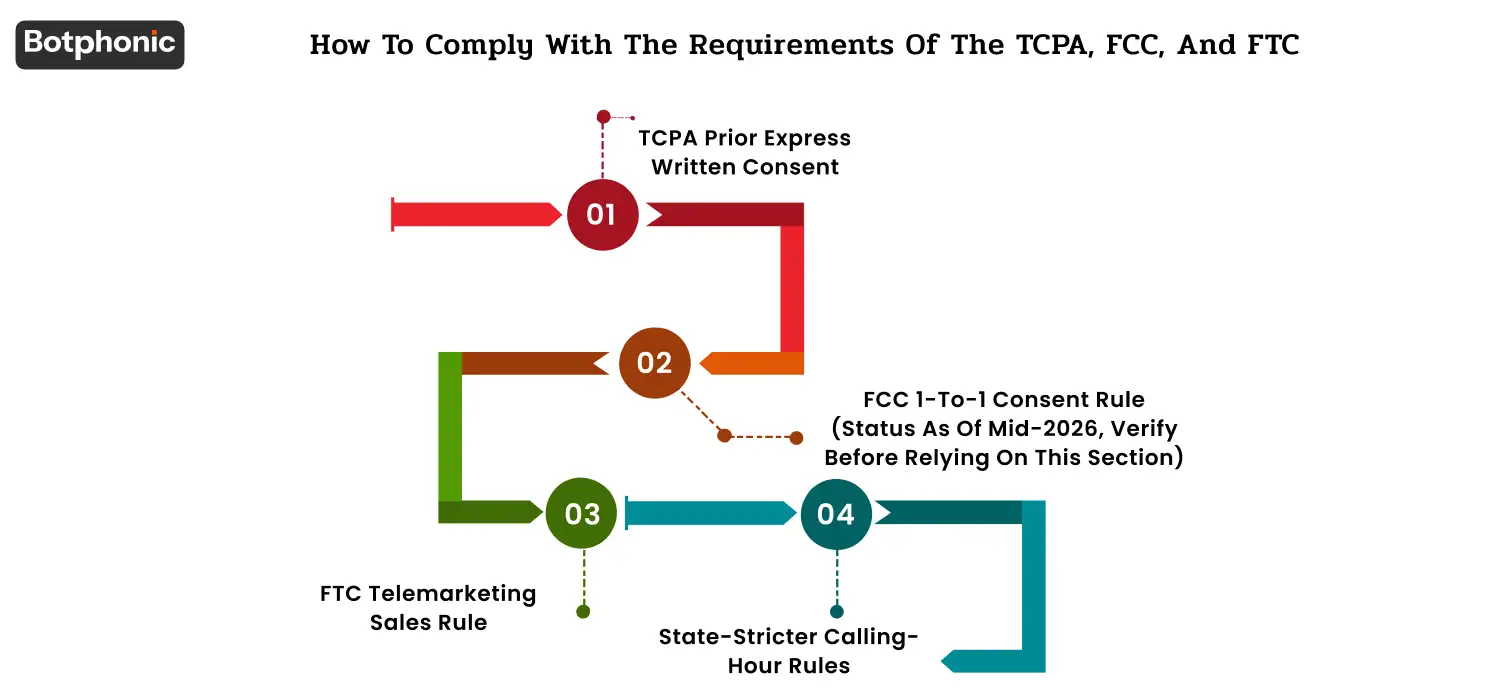
This is the regulatory area that has evolved the most since the 2023 source pages were written and continues to evolve as this guide is published. The vendor that claims to deal with compliance but does not specify the compliance rules is the vendor that will leave you in litigation with them.
TCPA Prior Express Written Consent
An automatic telephone dialing system (ATDS) or pre-recorded voice may not be used to place a telemarketing call to a residential or wireless telephone number without the prior written consent of the individual. There are text requirements in the consent:
- Clear and obvious statement that signing is a sign of consent.
- The seller must be identified.Seller identification required.
- Statement that consent is not a condition of purchase
- Notice that calls can be auto dialed or pre-recorded.
A standard “I agree to receive marketing communications” box is not considered TCPA compliance. Use counsel’s actual approved text (not an adapted version). FCC Rules: Robocalls.
FCC 1-to-1 Consent Rule (Status as of mid-2026, Verify Before Relying on this Section)
In December 2023, the FCC implemented the “1-to-1 consent” rule, which will prohibit the use of “lead-generator loophole” exceptions. The rule was supposed to go into effect on January 27, 2025. The rule was overturned in Insurance Marketing Coalition v. FCC in January 2025 by the 11th Circuit Court. It’s a dynamic situation with the FCC potentially re-issuing, tweaking, or appealing.
 PRO TIP
FTC Telemarketing Sales Rule
Most of the compliance for outbound telemarketing is covered under the TSR (16 CFR Part 310):
- 3% abandonment ceiling per campaign per 30 days (16 CFR 310.4(b)(4)(i))
- Caller ID transmission, the name and number of the seller must be transmitted, it cannot be blocked or spoofed.
- Calling-time restrictions are limits on when a party can call the other party; in other words, restrictions on the hours that can be used for a calling.Calling-time restrictions apply to the time that a party is allowed to call the other party; that is, the hours during which it is possible to call the other party.
- Do-Not-Call compliance (National DNC Registry and seller-specific internal DNC lists)
- Recordkeeping, records covering a minimum of 24 months of required transactions and consent records are kept.
Reference: FTC Telemarketing Sales Rule.
State-stricter Calling-hour Rules
Some states have more restrictive calling hour windows than the 8am-9pm federal window. Examples (check rules with counsel):
- Florida: 8 a.m. to 8 p.m. local
- Massachusetts: 8 a.m. to 8 p.m. local
- Mississippi: Various limitations on Sunday calling.
- Indiana: Tight enforcement and aggressive private right of action.
A modern outbound platform will perform the same with the strictest applicable window per call and use a number-prefix-to-time-zone lookup (not the agent’s time zone). Inquire from the vendor how this is being done.
Scrub Your List Clean And Get It Right
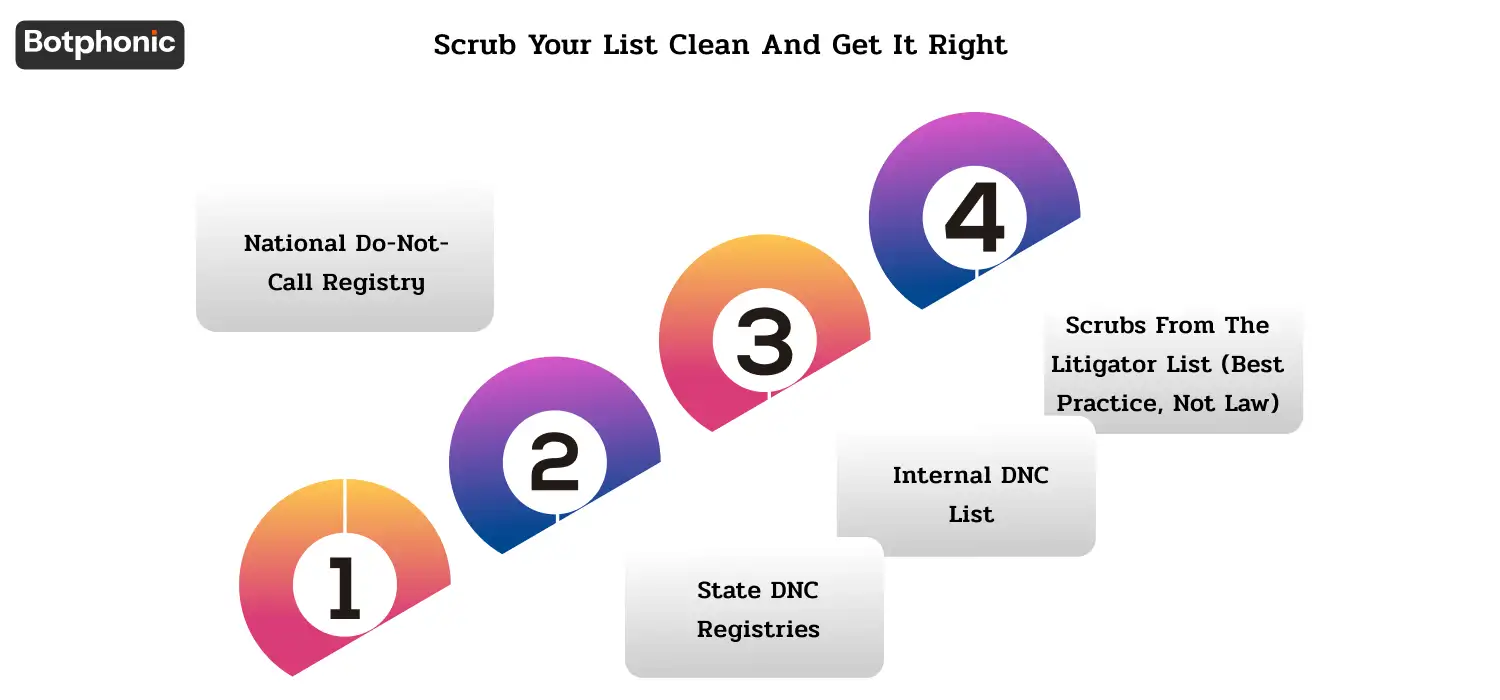
The one most important thing in the outbound team’s job is to ensure the list is kept clean. There are four layers of scrub and a true program is executed on all four layers of scrub.
1. National Do-Not-Call Registry
The federal list of numbers that have declined telemarketing is known as the National DNC Registry. Sellers need to “scrub” against the registry each 31 days. The buyer should confirm the cadence and the audit trail for most outbound platforms; this is automated.
2. State DNC registries
States have their own DNC register, and the rules are different. A national coverage outbound platform needs to scrub against each state list along with the federal.
3. Internal DNC list
The seller will also have to keep its own internal DNC list, or those who have explicitly requested the seller to cease the calls. Forever (no time limit) no exceptions, this list shall be followed in all campaigns and all related sellers.
4. Scrubs from the litigator list (best practice, not law)
There are consumers who have a business model of filing a TCPA suit. Industry vendors have lists, aka “litigator lists”, of the verified telephone numbers of the many plaintiffs who have been involved in recent TCPA cases. Examples:
- Blacklist Alliance
- DNC.com
- The Litigator List
While not legally mandated, scrubbing against these is done regularly by many high-volume outbound programs because purchasing one TCPA defense can exceed a year of scrub-vendor subscriptions.
Wireless Number Flagging
Automatic telephone dialing system rules of the TCPA are more stringent on wireless numbers than landlines. Wireless vs landline should be marked when the list is imported (via number-portability databases) and the dialer should enforce more stringent rules for wireless.
Outbound Metrics: What to Measure, What to Ignore
The typical outbound dashboard contains 50 metrics, but just a few are relevant to a buyer’s choice.
| Metric | Why it matters | Healthy benchmark (varies by vertical) |
| Connection rate | % of calls answered by a live person | 12–20% for cold; 30–50% for warm |
| Conversation rate | % of real conversations (>60s) in connection | 40–60% of connections |
| Conversion rate | % of conversations in which the desired outcome is achieved | Highly campaign-dependent |
| Agent occupancy | % of paid agent time spent on calls | 65–80% (above 80% = burnout, below 65% = under-utilized dialer) |
| Abandonment rate | % of calls that were answered without a live agent. | Must stay <3% per FTC TSR |
| Calls per attempt cycle | The average number of attempts before disposition. | 3–6 times per lead before pause |
| DNC scrub freshness | Number of days since the last DNC scrub. | <31 days (federal requirement) |
| STIR/SHAKEN attestation rate | % of calls, which are in operation at attestation A | Should be >95% |
The top-and-only mistake made in outbound dashboards is to get too excited about connection-rate gains without accounting for the abandon-rate compliance. When the connection rate is on the rise and the abandonment rate is on the rise, the dialer is over-pacing, the FTC penalty meter is running.
 NOTE
NOTE
The 9-Criteria Buyer’s Framework
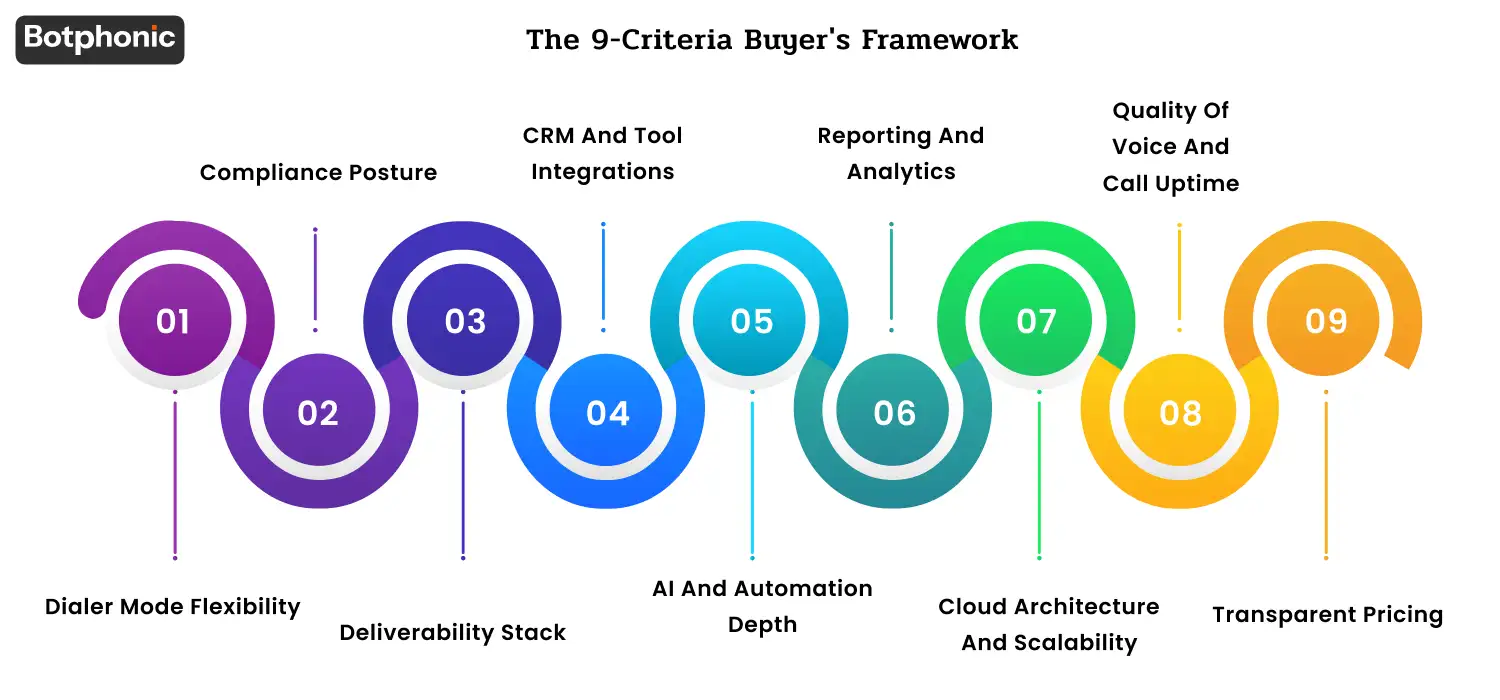
Consider these when choosing outbound calls software for your particular application:
1. Dialer Mode Flexibility
Vendor should support native (predictive, power, progressive, preview) all 4 modes and have the ability to choose them per campaign. “Only power dialing,” “only predictive” vendors are restricting your future flexibility.
2. Compliance Posture
- Internet connection data capture and Internet connection audit trail in accordance with TCPA written consent.
- The auto-throttle system on the FTC has a 3% abandonment rate.
- DNC scrubbing (federal + state + internal + litigator) with cadence that can be verified
- The ability to use state-specific calling-hour enforcement by called-party time zone.
- Two-party-consent state rules for recording-disclosure prompts
- SOC 2 Type II on request for a fee.
3. Deliverability Stack
- Attestation A (STIR/SHAKEN) is given automatically.
- Branded caller ID with the top analytics firms (Hiya, First Orion, TNS, Numericule)
- Rotate numbers to different volume levels (per number caps)
- Label Spam-Likely monitoring and remediation workflow
4. CRM and Tool Integrations
Native integrations within the CRM you are using – NOT a Zapier connector! This is important for outbound for the major sales platforms (Salesforce, HubSpot, Zoho, Pipedrive), as the disposition flow needs to update the lead record in real-time and not in a nightly batch.
5. AI and Automation Depth
- A detection of mood/sentiment from the call.
- Summarize the call and determine action items for the post call.
- Optimal-callback-time prediction
- AI + Human escalation logic combination.
- Multi-language support
6. Reporting and Analytics
- Real-time campaign dashboards
- Per-agent performance views
- Compliance metric dashboards (abandonment rate, DNC scrub freshness, attestation rate)
- Raw call records in a format that can be exported for analysis.
7. Cloud Architecture and Scalability
- All-in-one, multi-region, no per seat licenses that limit growth.
8. Quality of Voice and Call Uptime
Voice clarity impacts answer rates and conversation completion. Request a demo of the actual voice infrastructure, NOT a video demo. The SLA minimum is 99.95% uptime.
9. Transparent Pricing
Each vendor has a different pricing scheme, per minute, per call, per seat. Don’t get the “headline” rate, ask for the “all-in” rate (which covers all services throughout the campaign). For realistic numbers, volume pricing should start at realistic numbers as well.
How AI Changes The Outbound Calculation
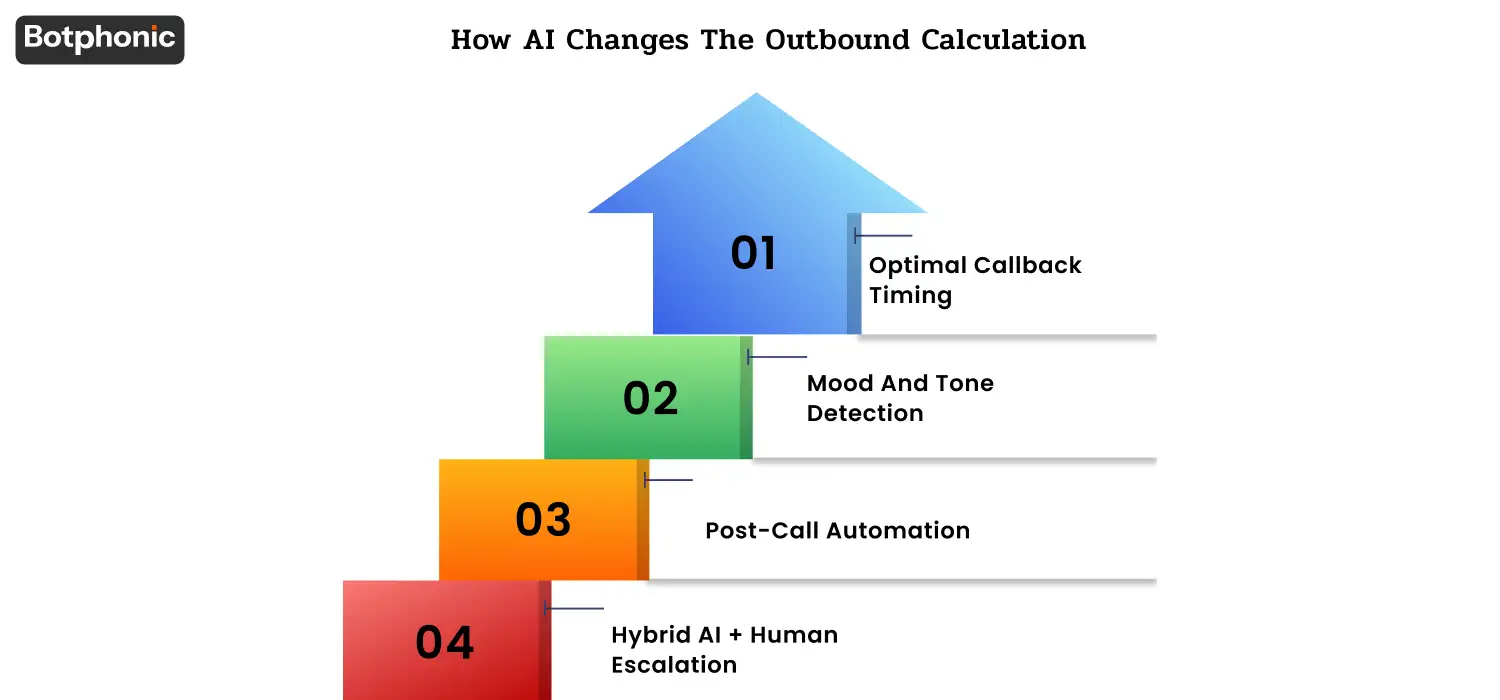
The 4-mode dialer is a technology that is decades old. The AI optimization layer is the new addition in 2026.
1. Optimal Callback Timing
The statistical model predicts the most probable time frame that the lead will give an answer, based on the lead’s previous activeness. For B2B, that can be things like staying away from Mondays before 10am or Fridays after 2pm. In the B2C context, the windows are more fine-grained.
2. Mood and Tone Detection
State-of-the-art AI call platforms can identify frustration, hesitation, or confusion in real time and forward to a higher-level agent, or activate other conversation paths. That’s important for compliance as well. Even if the caller does not use the literal phrase “stop calling” then you will detect it.
3. Post-call Automation
Post call work, on average takes up 8-12 minutes per call after the agent’s duty is complete (notes, CRM update, disposition coding, follow up scheduling) is the biggest hidden cost in outbound. The bulk is automatically handled by AI, and the agent goes on to verify the details.
4. Hybrid AI + Human Escalation
AI manages the entire conversation for high-volume routine outbound (appointment reminders, payment reminders, customer reactivation, NPS survey) conversations. Escalations are the calls when the customer has a complaint, a complex question, or a high-value opportunity comes to the fore; the human team takes the escalations. This is the staffing model used to build up productivity over time.
For the deeper AI architecture discussion, see how AI phone calls work from voice recognition to conversion.
How Outbound Calling Software Pays Back
The truth is that the ROI really depends on the use case. Three patterns dominate:
- Cost-substitution case. For higher volume calls (collections, fundraising, mass appointment setting, etc), the typical productivity multiplier per agent is 3:30-40 calls per hour to 100-200 calls per hour. The payback period is typically less than 6 months for a fully-loaded agent at ~$45K per year.
- Capture case. Outbound automation helps organizations that lag in the follow-up process for inbound prospects. A typical approach: outbound auto-call to respond to inbound leads within 60 seconds. The lift here is in conversion rate and not cost, typical impact is +20-40% on lead to meeting rate.
- Reactivation case. In regulated B2C verticals, the average rate of reactivating dormant customers (90+ days inactive) is usually 2-5% of the number of customers that are reached by the automated outbound. With a typical list size of 10K+ dormants and a typical customer LTV, this typically pays off in 60–90 days.
Check out the Botphonic ROI calculator for your particular use case.
Where Botphonic Fits
Botphonic is designed for compliance driven outbound. More than any feature: STIR/SHAKEN attestation A by default, FTC TSR 3% abandonment auto-throttle, DNC scrubbing with audit trail, state-time-zone calling-hour enforcement, branded caller ID across all major analytics providers, and SOC 2 Type II reporting on request.
For the outbound specific use cases:
- AI sales assistant and conversational AI for sales are two key tools to consider for outbound sales prospecting.
- Telemarketing campaigns: See AI telemarketing
- Lead qualification before agent handoff: See automate lead qualification and AI call bot for lead generation
- Feature evaluation: 12 must have features in an AI phone call assistant
- Security and compliance posture: Botphonic security
- Botphonic pricing: See pricing
Learn how Botphonic makes outbound calling contemporary in 2026
Start with a free trial