
Summarize Content With:
Every lead from Zillow comes with a timer counting down. As soon as a buyer places an inquiry, they’re waiting for a response right now. They won’t wait until tomorrow or an hour later. As you’re ending your open house, getting into your car, or finishing up other documents, that clock keeps ticking.
By the time you return their call, the lead might be long gone.
It’s not necessarily because of the poor quality of that lead. It’s all about the time. When a buyer reaches out, they are actively considering their option, weighing pros and cons, and looking for answers. Each second they spend waiting, the closer they get to losing their interest or talking to another agent.
Here comes the 5-minute rule.
In this post, you’ll learn why response time is so important for portal leads, why after-hours calls create additional challenges for agents, and what’s happening with the help of the AI call assistant or AI phone call software.
What Is the 5-Minute Rule, and Why Does It Exist?
This “5-minute rule” is very straightforward: If you do not contact a new lead within 5 minutes of an inquiry, your chances of ever connecting with that lead are severely diminished. In fact, according to InsideSales.com research, your chances of qualifying the lead decline by more than 80 percent after just 5 minutes. After 30 minutes, you are cold calling a stranger.
But this is not specific to the real estate industry. However, in the real estate industry, it is especially difficult due to who those leads are and what they are doing.
When you have a potential buyer who has been browsing on Zillow at 9:45 pm, they are definitely not window shopping. They have already driven around the area; they have done the mortgage calculations; and now they want to ask some questions. And if they are sending out inquiries, they are probably sending them to two or three agents at once.
Which one will get the call back? The one who acts first.
 PRO TIP
The Zillow Lead Problem Nobody Talks About
This is the part about Zillow leads that most real estate blogs leave out: Zillow is structured to instill urgency in buyers, not realtors. The buyers click the “Contact Agent” button, get their confirmation, and expect that the conversation starts.
So what really goes on?
In most cases, nothing in 30 minutes to several hours. If the call came after 8 PM, it can take the realtor a while to get it. In the meantime, the buyer is already talking to another person or moving on from his or her interest.
For those realtors who depend on Zillow Premier Agent leads, Realtor.com leads, or Redfin referrals, there is one fundamental issue: while the system was built for speed, the response system is not. There are no administrative people to help out. There is no after-hours service. It’s only a single realtor trying to do everything at once.
The leads don’t stop coming, but they stop getting converted into business. Yet the AI phone call assistant strikes a bit different.
What Happens at Each Stage After a Lead Submits
Buyer psychology following an inquiry sheds light on the reason for urgency. This is not because one has to be the first one; this is about engaging the buyer while he/she is still emotionally attached to his/her decision to buy the property.
| Response Window | What the Buyer Is Doing |
| 0–5 minutes | Still on the listing page, actively thinking about the property |
| 5–15 minutes | May have opened other listings, starting to compare agents |
| 15–60 minutes | Interest cooling, may assume the agent isn’t responsive |
| 1–3 hours | Often already spoken to a competitor |
| Next morning | Memory of specific listing has faded; original motivation has weakened |
It is not just about being quick; it is also about being relevant. A phone call after four minutes catches the buyer when he/she is still mentally there, in the kitchen.
The After-Hours Problem Is the Real Problem
Speed-to-lead is commonly discussed by agents as a business hours issue. It isn’t. The highest intent leads usually come in during the evenings and on weekends precisely when agents are not available.
Consider when a buyer really searches for property. They don’t do it at lunch on a Tuesday, they do it after hours, they do it on Sundays and they do it at 10:30 PM when the children are sleeping and finally have a moment to look at Zillow uninterrupted.
Here’s how it really works:
Lead submitted: 10:47 PM
Agent status: unavailable
A – without AI:
- Lead stays in inbox overnight
- Call from the agent at 8:30 AM
- Buyer already talked to another agent at 11:05 PM last night
B – with AI phone call software:
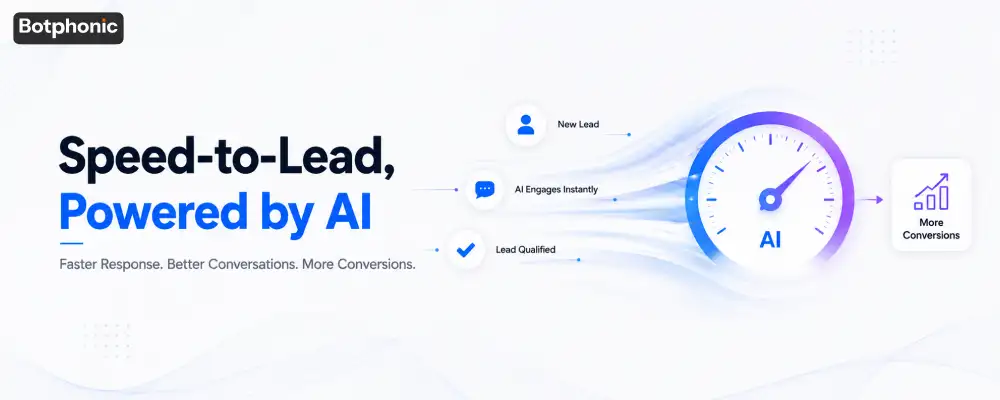
- AI makes the call in under 60 seconds
- Ask 3 knockout questions (timeline, pre-qualified, specific needs)
- Schedule a showing on Saturday morning
- Agent wakes up with an appointment in their calendar
Option B is not a dream. This is exactly what an AI for real-estate does when configured properly.
What AI Phone Call Software Actually Does in Recruiting Screening and Real Estate Lead Calls
AI calling systems aren’t just leaving messages anymore – the good ones actually have real phone conversations. This includes the AI system greeting the prospect as the agent’s assistant, recognizing the exact listing they asked about, and asking qualifying questions:
- Are you working with an agent now?
- Are you pre-approved for financing?
- What is your desired move-in timeline?
- Do you want to set up a showing?
They are not trick questions – it is the exact same knockout questions an experienced realtor will ask. The difference is that it’s done at 11 PM on a Friday when there isn’t any human team member available to handle it.
Once the call is complete, all the information is sent to the realtor’s CRM – the name of the lead, their contact information, financing approval, timeline, and showing booking status. The agent reviews this over their morning coffee.
Worth exploring in this area are the tools which integrate directly into the real estate CRMs, such as Follow Up Boss, Lofty (formerly Chime), and Sierra Interactive. Also, the technology resource center of the National Association of Realtors monitors emerging real estate technology categories, including AI voice and automation technologies.
 NOTE
NOTE
The Two Sides of Real Estate Communication AI Solves
In most of the follow-up articles on lead generation, the main theme revolves around the single issue of contacting the buyer quickly. However, in reality, the real-time problem for agents is not
just one-sided; it is a two-sided one.
The first side is the buyer. It involves all the newly received inquiries from portal leads, organic leads, open house leads, and referral leads. This involves very quick and personalized outreach. Ideally, these should be completed within minutes.
The second side is the client. Involving all existing buyers and listing clients who will require updates, reminders, and check-ins. A buyer under contract will like to get an update on his property inspection process. An existing listing client will prefer weekly updates. This does not necessarily require urgency but it requires consistency.
AI phone call addresses both issues:
The former involves speed and qualification. While the latter involves consistency of communication without the agent blocking his calendar for each call.
The CONTACT Framework: How AI-Powered Speed-to-Lead Actually Works
Here’s the basic process if you want to implement an AI solution for building a quicker lead response process:
C — Capture: Lead submits inquiry via Zillow, Realtor.com or website
O — Outreach: AI dials and connects the lead within 60-90 seconds
N — Nurture the discussion: AI asks 3-5 qualification questions and listens to the answer
T — Tags and scores: Answers are recorded and tagged based on urgency
A — Appointment: Available showings are offered and scheduled
C — CRM sync: Entire call summary is transferred into the agent’s CRM automatically
T — Transfer (if required): Very intent-based leads may get warm-transferred to a live agent during the call
And this is not only a process but also something that makes the difference between closing more leads than others or losing them to people who answer faster.
AI vs. Human Follow-Up: A Realistic Comparison
The following is not meant to suggest that AI will replace human agents in all cases. However, it is good to be honest about the capabilities and limitations of both manual options for dealing with leads.
A human agent system needs:
- Availability to make a phone call within 5 minutes, always, 7 days a week
- Scripts that ask the right questions but do not sound canned
- CRM skills to record each call with detailed notes
- Zero bad days, zero showings going long, no missed calls
The AI system takes care of the volume issue. It does not get tired, never forgets to call back, and will not leave a potential client hanging because an agent is on the way somewhere.
What the humans do well: nuance of conversation, emotional intelligence, negotiation, complicated objections. What the AI does well: speed, consistency, availability, and scalability.
The best-performing agents use both. The AI for real estate makes the initial call and qualifies the potential customer. The human takes over when there really is something there.
Common Mistakes Agents Make With Lead Response
Despite being knowledgeable about the 5-minute rule, agents tend to defeat themselves using such patterns:
- Dialing from an unfamiliar number: Clients won’t pick the phone. Automated calls with local numbers have better response rates than non-local or toll-free ones.
- Recording vague messages: “Hello, this is John, calling back regarding your inquiry” this message doesn’t provide any information and doesn’t encourage clients to reply.
- Not trying more than once: The majority of conversions happen on the second or even third try. Once-and-done approach results in the loss of valuable leads.
- No way to reach clients outside business hours: It is the biggest mistake of them all. There is no plan for contacting clients after office hours, which will result in portal leads not being contacted on time. Installing an AI scheduling assistant for prospect engagement, answering on time, and schedule viewing in case of unavailability.
Asking incorrect knockout questions. “What is your budget?” is usually perceived as too intrusive a question for the first call. Questions about timeline and agents’ involvement are much easier and provide additional information.
AI phone agents respond to new real estate leads within seconds, qualify buyers, and book showings even when you’re in a showing, driving, or off the clock.
Start Free – No Card NeededIs AI Phone Call Software Worth It for Real Estate Agents?
It all boils down to one question for ROI: how much is one extra appointment per month worth?
If an average commission earned on a closed deal amounts to $8,000-$12,000, then adding even just one more lead each month to the list of those who were not reached before through the use of such tools will give you easy-to-grasp numbers. All systems in this field cost about several hundreds per month — that’s nothing compared to a single deal.
However, the real challenge lies not in the price but rather in the adoption. Agents who get results from using such technologies normally know how to correctly configure the tools with the right qualifying questions, seamless integration with the CRM system, and the perfect handoff of the leads to the agent.
Configure the technology poorly and you get just another abandoned tool.
Configure the technology right and enjoy a full-time automatic outbound caller which will qualify leads, book appointments, and update your CRM while you do things only an agent can do.
