
Summarize Content With:
Introduction
What no one discusses during solar industry conferences is that much of the deals are killed prior to a human being picking up the phone.
Not since the customer was not interested. Not because you were not right in price. Simply because some one called on Tuesday night at 8:47 and went to voicemail and by Wednesday morning they had already made a site visit with the other guy down the street.
I have already interviewed solar agency owners everywhere across the Central Valley and the East Valley – individuals with good operations, good crews, satisfied clients – and this is the one complaint that I most often hear. “We just miss too many calls.” Or: “My front office customer is excellent, however, she cannot be in every place simultaneously.
It is what an AI call assistant for solar companies finds a solution to. Not flawlessly, not supernaturally – but sufficiently, so that the calculations mutate pretty quickly. This article will also take you through the realities of what is actually happening in the Fresno and the Mesa solar markets today, what AI receptionist tools actually perform (and do not perform), what you can actually hope to save, and how to select one without being scalded by a sales pitch.
No fluff. Just the stuff worth knowing.
Why Are Fresno & Mesa Solar Markets So Competitive Right Now?
The Demand Surge No One Planned For
The reason why both cities share the same issue in various ZIP codes is that there are an excess number of solar companies going after the same homeowners.
Fresno is located in a bakery valley. Summer electricity bills with PG&E can be up to $400, $500, and even more with a medium sized house. People are motivated. They are researching on solar, asking quotes, completing web forms at any hour. The demand has been accumulating over the years, but the inflation really jumped into high gear when the federal Inflation Reduction Act cemented a 30% tax credit up to 2032. That made the arithmetic of many fence-sitters.
Mesa is another version of the same story. Customers of APS and SRP have seen rates steadily rise, and the payback equation is almost pathetic with Arizona having 299-plus sunny days annually. It is not a problem of making people believe that solar is a good option. The problem is to reach them before the succeeding agency.
| What’s Driving Competition | Fresno, CA | Mesa, AZ |
| Avg. sunny days per year | 300+ | 299 |
| YOY installation growth (2023-24) | ~18% | ~22% |
| Active solar agencies competing | 80+ | 100+ |
| Avg. residential system size | 7.2 kW | 8.1 kW |
| Primary utility pressure | PG&E rate hikes | APS/SRP rate hikes |
Why Speed of Response Is Everything
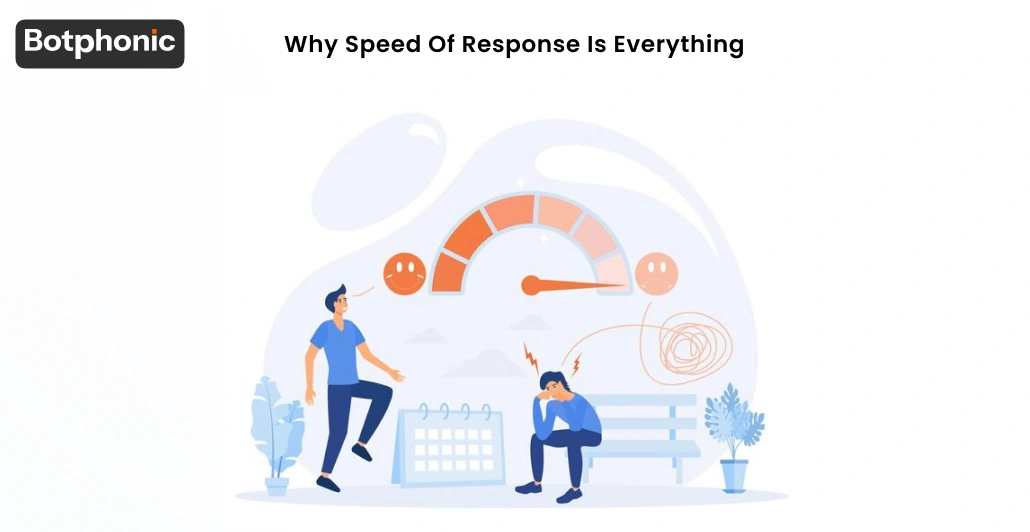
The awkward part here is that in a market where there are 80 or 100 active agencies, the second company to make a call back is practically the same thing as not making a call at all. A study conducted by Harvard Business Review discovered that those companies who responded to web leads in five minutes were nine times more likely to convert as compared to those who took thirty. Nine times. That’s not a small edge. That is what constitutes the distinction between a pipeline and a drought.
78 percent of the customers stick with the first respondent. Not the one that makes the best panels, longest warranty or friendlies the salesperson. First contact wins. That’s the game.
What Can an AI Receptionist Actually Do for My Solar Agency?
Forget the Sci-Fi Image, Here’s What It Really Does
We should kill the sci-fi image immediately. AI receptionist is not robot. It has no face, it is not going to act like a human being and those that are good are going to tell the callers that it is an automated system. What they ARE is an exceptionally competent, exceptionally patient and exceptionally rapid first point of contact who works round the clock without the necessity of a salary, health insurance and even a lunch break.
Tools like Botphonic are built with exactly this in mind, voice AI that handles inbound solar leads around the clock, qualifies them in real time, and books appointments without any human involvement. It is the kind of setup that used to require a full after-hours call center. Now it takes a weekend to configure.
This is what a decent AI receptionist manages in real-life in a solar shop on a daily basis:
| What It Does | Real-World Impact for Your Agency |
| Receives calls 24/7 even at nights and weekends | Intercepts the leads that your team is just unable to reach physically |
| Reacts to the web forms in real time through text or email | Reacts to the hot lead before they head to Google |
| Make appointments on your calendar | No phone tag, no back and forth – appointment made |
| Answers FAQs on incentives, schedules, costs | Saves your team from repeating the same answers 30x a week |
| Qualifies leads before passing to your sales team | Only real prospects get discussed with by your closers |
| Records all communications directly to your CRM | No more lost in the system, no data handover |
| Routes urgent or complex calls to a live human | You remain in charge of what is the most important |
| Speaks Spanish where necessary | Critical in both Mesa and Fresno – more on this below |
A Real Agency Owner’s Experience
An owner of a solar agency I had spoken with in Chandler (it is right outside Mesa) was direct: we put it up in a weekend. In 3 weeks we had already scheduled six site visits of leads acquired after 6 PM. Those were six jobs we just simply did not have before.
It is not a dramatic story of transformation. It is simply stopping a hole that was losing money on a daily basis.
 NOTE
NOTE
The Bilingual Factor in Fresno & Mesa
One point that can be highlighted in the case of Fresno and Mesa, in particular: both cities have a significant number of Spanish-speaking residents. Do not accept a translated FAQ page when you are rating the tools. You desire an artificial intelligence capable of having a verbal conversation in Spanish – qualification questions, appointment scheduling, the entire process. This is already natively supported on several platforms and it is important in these markets.
Botphonic, for instance, supports bilingual voice conversations natively, not a translated script bolted on afterward, but actual conversational Spanish built into the call flow. For agencies in Fresno and Mesa, that is not a nice-to-have. It is a real competitive edge.
How Much Time and Money Can I Save With AI?
1. Start With the Hours Your Team Is Bleeding
This is what makes people brighten up their eyes, or make them cynical. Fair enough. We should actually look at the figures rather than make generalized percentages.
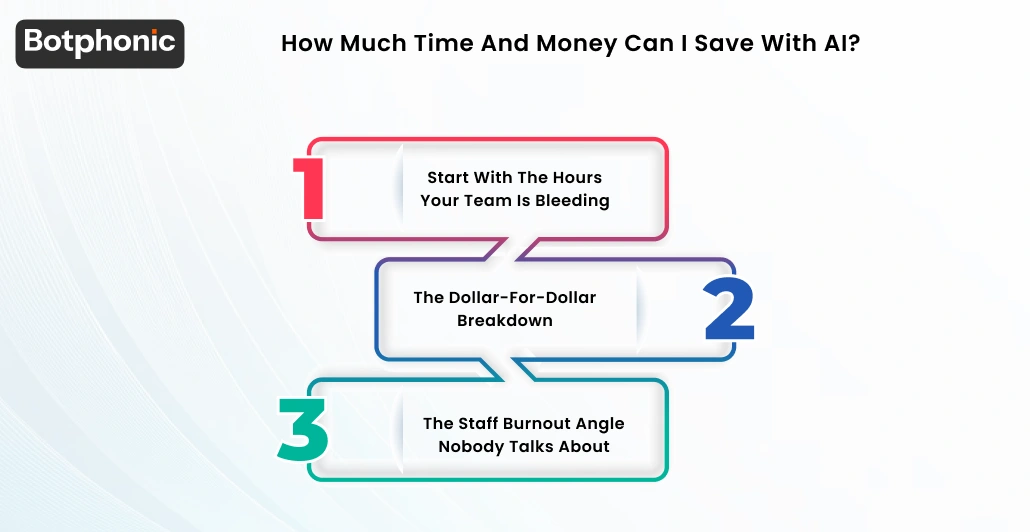
Start with time. The average solar agency that completed 30-50 jobs a month is spending 18-25 hours per week on administrative tasks which would mostly be automated by an AI call assistant for solar companies. Here’s a realistic breakdown:
| Task | Hours/Week Without AI | Hours/Week With AI | Time Recovered |
| Lead follow-up calls and texts | 6-8 hrs | Under 1 hr | ~7 hrs |
| Booking and confirming site assessments | 4-5 hrs | 0 hrs (fully automated) | ~5 hrs |
| CRM data entry after calls | 3-4 hrs | 0 hrs (auto-logged) | ~4 hrs |
| Answering repeat FAQs and callbacks | 5-6 hrs | 1 hr (complex calls only) | ~5 hrs |
| Total per week | 18-23 hrs | Under 2 hrs | ~20 hrs saved |
2. The Dollar-for-Dollar Breakdown
At an estimate of 20/hours as an administration expense, which in the actual case is half of what California would pay, that is about 1600 dollars a month of saved labor expenses. The majority of AI receptionists In solar that are affordable to smaller agencies cost between 200 and 500 dollars every month. You are looking at a net monthly gain of between 1,100-1,400 without considering one extra sale.
Take revenue into consideration now. Assuming the average response rate of your agency is 20% on site visit, and your AI receptionist retrieves four after-hours leads a month otherwise cold, and your average deal is approximately 18000 dollars. you have a potential 14400 of revenue per month that you might not have received otherwise. Some months it’ll be less. Some months, it’ll be more.
The real calculations: AI platform cost: Between $200-$500/month. Labor savings: ~$1,600/month. The recovered lead is upside to revenues variable, yet even 2 additional closed deals/month is many times the tool-cost.
3. The Staff Burnout Angle Nobody Talks About
Another angle that should be considered: staff burnout. When your administration team does not spend half their day making follow-up calls, they can be doing things that cannot be automated, like customer issues, escalation, the calls where the person just wants to complain about their HOA giving them grief because the panel is in their backyard. That is a true quality-of-work advantage that does not appear in a spreadsheet but would certainly have a positive impact on the duration of the stay of good individuals.
How Does AI Integrate With the Tools My Solar Team Already Uses?
The Integration Question Everyone Has
The second question I hear the most after the first one, which is; is it going to confuse my customers? The solution, in the majority of contemporary platforms lies in the fact that integration is actually not that complex anymore.
The instruments solar agencies dwell in are rather standardized. The following works well with the majority of AI receptionists:
- CRM systems: JobNimbus, HubSpot, Salesforce, Zoho CRM
- Calendar: Google Calendar, Acuity Scheduling, Calendly
- Proposal and design software: Aurora Solar, OpenSolar, Scoop Solar
- Project management: Monday.com, ServiceTitan, Buildertrend
- Comms: Slack, Gmail, SMS solutions such as Twilio
- Financing and payments: QuickBooks, Stripe, GreenSky and additional solar financing portals
The majority of platforms are either native integrated or use Zapier without any coding. The installation process usually lasts one to three days in case someone reasonably tech-composure is available on your team. Onboarding support is often provided by vendors – take advantage of it. The hour is worth it because you actually want to ensure that the flow of calls are correctly drawn out in the process you are dealing with.
 PRO TIP
What the Setup Process Actually Looks Like
The actual setup process is largely concerned with teaching the AI about your particular business – what you are offering, if it is own or rent, what types of qualification questions you usually ask (age of the roof? utility company?), how many hours you operate, what triggers an escalation. The less general it is set up, the better it works. Don’t rush that part.
Platforms like Botphonic walk you through this configuration step by step during onboarding, defining your service area, setting your qualification thresholds, mapping escalation triggers, so you are not left staring at a blank settings screen figuring it out alone.
How Do I Choose the Right AI Receptionist for My Solar Agency?
1. The Market Is Crowded. Here’s How to Cut Through It
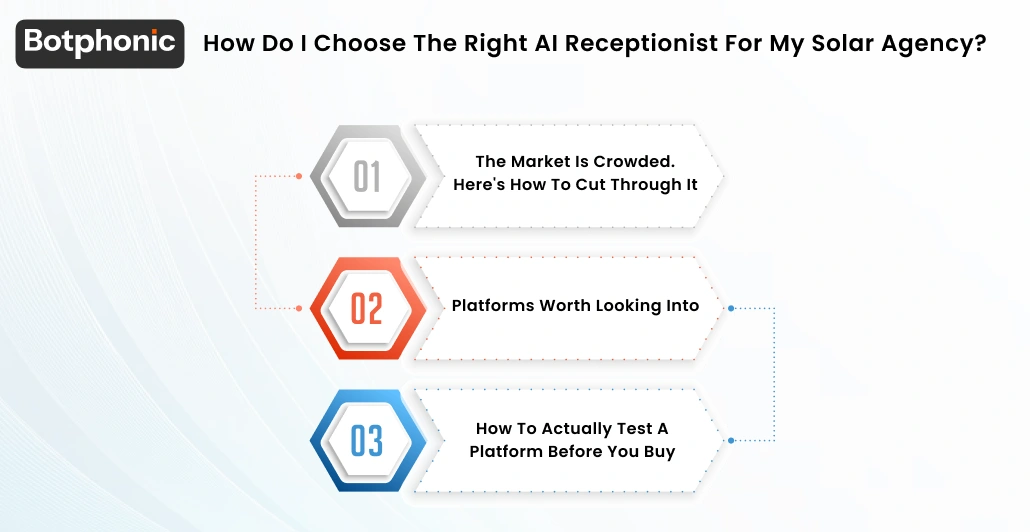
And here where I would have lingered, and been cussed. The market of AI receptionist has become saturated, and not all tools know solar. There are platforms that were designed in the industry. Other ones are generic virtual receptionist applications that actually exist but do not have any clue what a kWh is or what a hole in the ground is.
Whenyou are comparing opportunities, the following is the checklist that I would go through:
| What to Check | Why It Actually Matters | What Good Looks Like |
| Solar-specific training | Generic AI fails on ITC questions, NEM 3.0, interconnection schedules | AI answers solar tax credit question correctly and confidently |
| Bilingual capability | Fresno and Mesa have large Spanish-speaking homeowner populations | Full conversational Spanish in call flows, not just translated text blurbs |
| Lead qualification logic | You don’t want your sales team spending time on renters or small roofs | Customizable own/rent, roof age, utility provider, bill size questions |
| CRM integration | Manual data entry following AI calls nullifies the entire concept | Native integration with JobNimbus, HubSpot, or whatever you use |
| Escalation handling | Some callers require a live operator only | Smart routing rules that cause calls to be routed to live staff when needed |
| Pricing transparency | Per-minute billing accrues silently | Flat billing or per-conversation billing, know your model before signing |
| Trial period | Always test before committing | Free trial or money-back guarantee is a reasonable ask |
2. Platforms Worth Looking Into
Solar-vertical platforms to consider: Botphonic, Smith.ai, Signpost, Broadly, and more recent solar-vertical tools that are based on Twilio or Dialpad. Some companies have developed solar-specific packages with pre-configured scripts of the most commonly asked questions by the homeowners, such as, utility bill savings, the availability of federal tax credit, its installation schedule, and what will happen when you sell the house.
3. How to Actually Test a Platform Before You Buy
One more point: requesting a demo, do not allow the sales rep to demonstrate it using his or her pre-cooked scenario. Give them YOUR scripts. Ask them to demonstrate to you what the AI does with a caller who wants to know whether he/she qualifies to join the ITC yet he/she has just refinanced. Inquire how it manages a person who gets angry and begins addressing it. That is where you can see how strong the tool is.
Before you sign anything: Have your three most frequent cases of caller scenarios run through the demo. When the AI stumbles on simple solar questions or becomes robotic during handoff on the escalation, continue searching. The correct tool will pass not only the test of the vendor.
Meet Botphonic the AI receptionists that handles your first customer-interaction smoothly, simplifying the lead generation process.
Request a Free DemoConclusion
Fresno and Mesa do not see the solar market slowing down. Utility rates continue to increase, the federal tax credit is in place and stagnant homeowners finally jumped the fence. That will augur well with your pipeline – but it will increase the competition that each of your leads is receiving.
If you are looking for a place to start, Botphonic is worth a look, especially for agencies in markets like Fresno and Mesa where after-hours lead capture and Spanish-language support are not optional extras. The setup is straightforward, the pricing is transparent, and the onboarding team knows solar. AI call assistants for solar companies have become a necessity. Sometimes the right tool is just the one that does exactly what you need without making you figure it out yourself. And lastly AI voice assistant for solar industry is rapidly changing the way communication ha been made,
