
Summarize Content With:
What You’ll Learn
- Why AI cold calling is growing so rapidly
- How modern AI voice agents actually work
- The biggest problems AI solves for sales teams
- Real-world AI cold calling use cases
- The future of AI and human-led outbound sales
AI cold calling isn’t replacing sales teams, it’s fixing their biggest problem.
For years, cold calling has been declared dead. New channels emerged, social selling gained popularity, and email automation promised to replace traditional outreach. Yet despite all these changes, one fact remains true: conversations still close deals.
The issue has never been cold calling itself. The issue is that traditional outbound sales is difficult to execute consistently at scale.
Reducing that manual research burden depends on solid identity resolution underneath — stitching CRM, web, and prior-touchpoint data into a single profile so reps (or AI voice agents) start every call already knowing who the prospect is, instead of researching from scratch. These tasks are necessary, but they consume time that could otherwise be spent building relationships and closing opportunities.
This is where AI cold calling is beginning to reshape the sales landscape. Instead of asking sales teams to do more with the same resources, AI voice agents help automate repetitive outreach activities while maintaining personalized conversations. The result is a sales process that becomes faster, more scalable, and significantly more consistent.
The Real Problem Most Sales Teams Face Isn’t Lead Generation
Many organizations believe they have a lead-generation problem. In reality, they often have a follow-up problem. A prospect downloads a guide. A lead requests a demo. Someone fills out a contact form. Then nothing happens for hours or sometimes days.
By the time a sales representative reaches out, the prospect may have already spoken with a competitor. Research consistently shows that response speed influences conversion outcomes. Yet many sales teams struggle to maintain timely outreach because of workload limitations. The challenge isn’t attracting interest. The challenge is responding quickly and consistently enough to convert that interest into opportunities. AI cold calling was designed to solve exactly this issue.
AI Cold Calling by the Numbers
Before exploring how AI is changing outbound sales, it’s worth looking at the broader trend driving adoption.
| Statistic | Why It Matters |
| 83% of sales teams using AI reported revenue growth | AI is increasingly linked to sales performance |
| High-performing sales organizations are more likely to use AI | Adoption is strongest among top performers |
| Generative AI could unlock between $800 billion and $1.2 trillion in annual productivity across sales and marketing globally | Businesses see significant long-term potential |
| AI adoption in customer-facing roles continues to accelerate globally, with approximately one in six people now utilizing generative AI tools daily | AI is becoming a standard business tool |
What Is AI Cold Calling?
AI cold calling is the use of conversational AI voice agents to conduct outbound sales conversations automatically.
Unlike traditional robocalls that rely on prerecorded messages and rigid scripts, modern AI voice agents can engage in dynamic, two-way conversations. They listen to what prospects say, understand intent, and respond in a natural manner.
Think of an AI voice agent as a virtual sales development representative that can engage prospects, ask qualification questions, schedule meetings, and document outcomes without requiring manual intervention.
The technology combines speech recognition, language understanding, voice synthesis, and workflow automation to create interactions that feel remarkably human.
Learn more: Best AI Phone Bot For Cold Calling
How AI Cold Calling Actually Works
At a high level, AI cold calling follows a straightforward process.
The AI initiates a call and begins a conversation with the prospect. As the conversation unfolds, speech recognition technology converts spoken language into text. Natural language processing then analyzes the prospect’s responses and identifies intent.
Based on that intent, the system generates an appropriate response, asks follow-up questions, or takes action such as scheduling a meeting.
Modern platforms can also integrate directly with CRM systems, ensuring that every interaction is automatically recorded and categorized.
This allows organizations to scale outbound outreach without scaling administrative workload.
The Biggest Benefits of AI Cold Calling
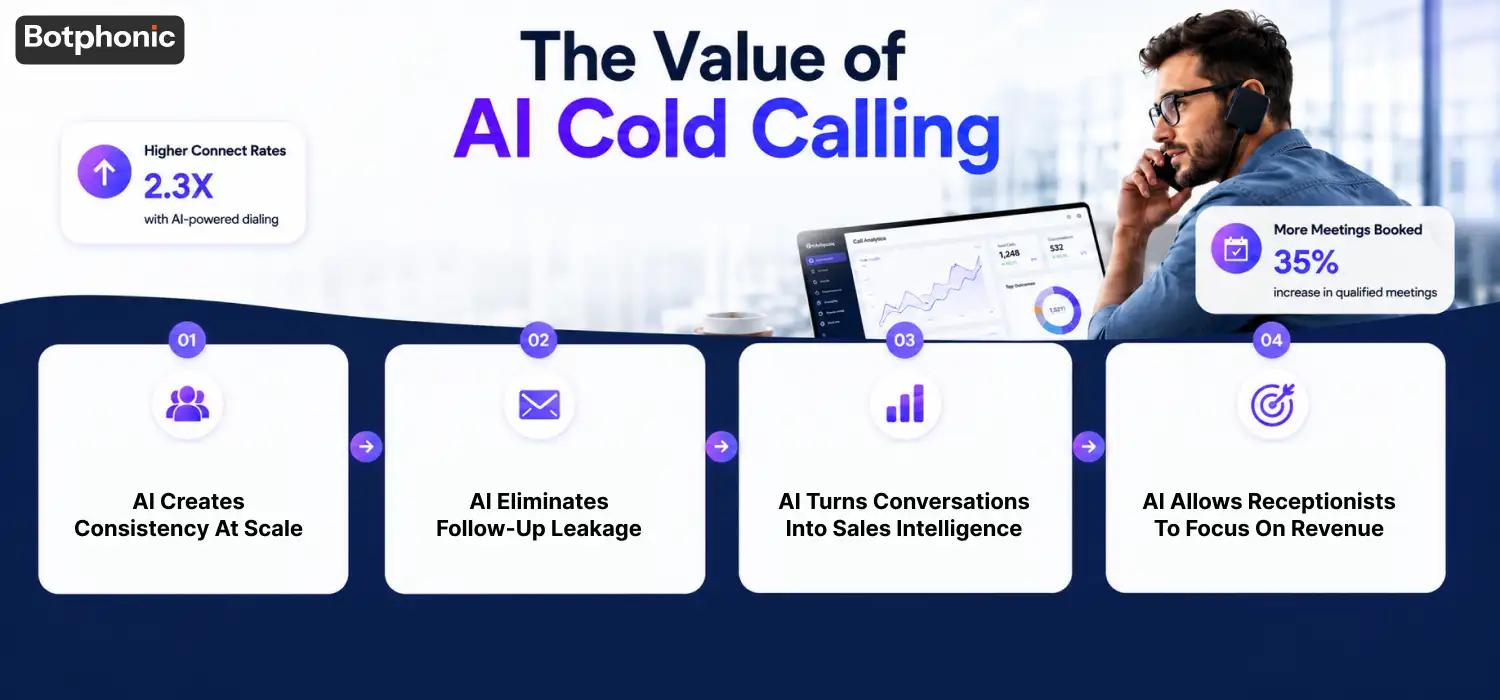
1. AI Creates Consistency at Scale
One of the most overlooked challenges in outbound sales is inconsistency. Human performance naturally fluctuates. Energy levels change throughout the day. Messaging evolves. Follow-up habits vary between representatives.
AI eliminates this variability. Every prospect receives a consistent experience, ensuring that qualification standards, messaging, and follow-up processes remain aligned across the organization.
2. AI Eliminates Follow-Up Leakage
Most sales opportunities are not won during the first interaction. Prospects often require multiple touchpoints before they are ready to engage.
Unfortunately, follow-up is where many sales processes break down. AI voice agents can automatically re-engage leads, schedule future outreach, and continue conversations over time. This dramatically reduces the number of opportunities lost due to simple neglect.
3. AI Turns Conversations Into Sales Intelligence
Traditional sales calls generate valuable information, but much of it is never analyzed. AI changes this dynamic.
Every conversation can be examined for patterns such as common objections, competitor mentions, buying signals, and frequently asked questions.
These insights help sales leaders refine messaging, improve qualification processes, and identify emerging market trends.
4. AI Allows Receptionists to Focus on Revenue Activities
Sales professionals generate the most value when they are building relationships and closing deals. Administrative tasks create friction.
By automating call logging, scheduling, qualification, and data entry, AI allows representatives to spend more time on high-value activities that directly influence revenue.
The 2026 Reality: What AI Cold Calling Is Actually Delivering
The conversation around AI cold calling has moved beyond experimentation. In 2026, businesses are no longer asking whether AI can support outbound sales, they’re measuring how much pipeline, efficiency, and consistency it can create.
The biggest difference isn’t just the call volume.
It’s execution. While human SDRs bring relationship-building skills and strategic thinking, AI voice agents bring speed, consistency, and the ability to follow proven sales processes at scale.
AI Cold Calling vs Human SDR Performance
| Metric | Human SDR | AI Cold Calling |
| Connect-to-meeting rate | 4-6% average | Up to 14% with optimized workflows |
| Calls handled per day | 80-120 calls | 10,000+ simultaneous outreach attempts |
| Sales process consistency | Varies by rep experience and energy level | Consistent on every conversation |
| Follow-up execution | Often delayed or missed | Automated and scheduled instantly |
| Lead qualification | Depends on rep availability | Conducted immediately at scale |
| Revenue impact | Varies by team performance | 83% of AI-adopting sales teams report revenue growth |
| Qualified opportunities generated | Baseline performance | Up to 50% increase when combined with AI assistance |
One of the most overlooked advantages of AI sales automation is consistency. A sales rep’s performance naturally changes throughout the day. Energy levels fluctuate. Messaging evolves. Follow-up quality varies depending on workload.
An AI SDR doesn’t have those limitations. Whether it’s the first prospect contacted on Monday morning or the 10,083th conversation later in the week, the system follows the same qualification process, asks the same discovery questions, and executes the same follow-up strategy.
This consistency becomes especially valuable as outbound teams scale. Another major difference is follow-up execution. Many sales opportunities are lost simply because follow-up doesn’t happen quickly enough. Prospects express interest, but by the time a representative reaches out again, momentum has disappeared.
With AI customer service, follow-ups can be scheduled and executed automatically. Every prospect receives the right outreach at the right time, without relying on manual reminders or spreadsheets. For businesses running high-volume outbound campaigns, this can significantly improve conversion rates and pipeline generation.
 NOTE
NOTE
How to Launch AI Cold Calling with Botphonic in 4 Simple Steps
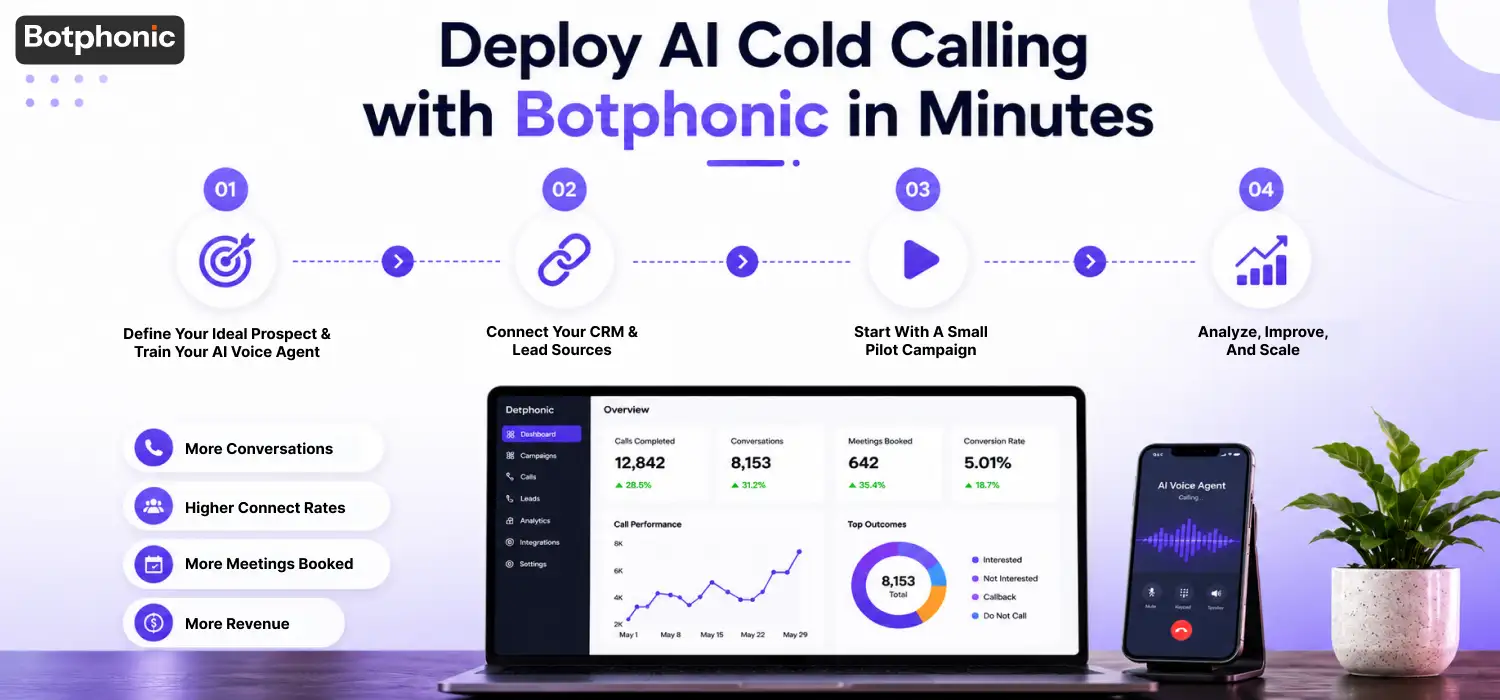
Successfully implementing AI cold calling isn’t about turning on a tool and expecting immediate results. The best outcomes come from building a strong foundation, testing carefully, and continuously improving performance based on real conversations.
Step 1: Define Your Ideal Prospect and Train Your AI Voice Agent
Before launching your first campaign, your AI voice agent for sales needs to understand your business, customers, and sales process.
Start by providing information such as:
- Your products or services
- Common customer pain points
- Frequently asked questions
- Competitor comparisons
- Qualification criteria
- Typical sales objections
The more context your AI agent has, the more naturally it can engage prospects and identify qualified opportunities. Think of this stage as training a new sales representative. The quality of the training directly influences the quality of the conversations.
Step 2: Connect Your CRM and Lead Sources
The next step is integrating Botphonic with your existing sales stack.
Connect your CRM, whether it’s HubSpot, Salesforce, Zoho CRM, or another platform, so the AI can access prospect information and automatically update records after each conversation.
You should also connect your lead sources, including:
- Website forms
- Lead databases
- Outbound prospect lists
- Marketing campaign leads
- Intent-based prospecting tools
When your AI cold calling software has access to accurate lead data, it can personalize conversations, improve qualification accuracy, and create a smoother experience for prospects.
Step 3: Start with a Small Pilot Campaign
One of the biggest mistakes businesses make is trying to automate their entire outbound sales process immediately.
A better approach is to start small.
Choose a single workflow that generates a high volume of repetitive conversations, such as:
- Lead qualification
- Demo booking
- Follow-up calls
- Re-engagement campaigns
Run a focused pilot campaign for a few weeks and track key performance metrics, including:
| Metric to Measure | Why It Matters |
| Connect rate | Measures how many prospects engage |
| Meeting booking rate | Shows campaign effectiveness |
| Lead qualification rate | Identifies lead quality |
| Cost per qualified lead | Helps evaluate ROI |
| Follow-up completion rate | Measures outreach consistency |
This approach allows you to gather real-world data before expanding your AI phone call efforts across the entire sales organization.
Step 4: Analyze, Improve, and Scale
The most successful AI cold calling programs aren’t built in a day. After your pilot campaign, review the conversation data carefully.
Look for patterns such as:
- Common objections
- Questions prospects ask frequently
- Points where conversations lose momentum
- Qualification questions that generate the best responses
- Messaging that leads to booked meetings
Use these insights to refine your AI agent’s training and improve future conversations.
Every interaction helps your AI call assistant become more effective. Over time, continuous optimization can significantly improve conversion rates, lead quality, and overall campaign performance.
As results improve, you can gradually expand into additional sales workflows and larger prospect segments.
 PRO TIP
Compliance Checklist for AI Cold Calling in the United States
As AI cold calling becomes more common, compliance is no longer optional. Businesses must ensure their AI voice agents for sales follow federal, state, and industry-specific regulations to protect consumers and avoid costly penalties.
The good news is that most modern AI cold calling software platforms include compliance features that help businesses operate within legal guidelines. However, understanding the core requirements remains essential.
Key AI Cold Calling Compliance Requirements
| Regulation | What Businesses Must Do | Best Practice for Compliance |
| TCPA (Federal) | Obtain appropriate consent before placing automated calls and provide a clear opt-out option | Ensure consent management is built into your outbound calling workflows |
| State Telemarketing Laws | Follow state-specific calling restrictions, consent requirements, and contact rules | Configure campaigns based on the regulations of each target state |
| AI Disclosure Requirements | Clearly inform recipients when they are interacting with an AI-powered system where required | Introduce the AI agent transparently at the beginning of the conversation |
| HIPAA (Healthcare Industry) | Protect patient information and maintain strict data privacy standards | Use secure data storage and HIPAA-compliant communication processes |
| National Do Not Call (DNC) Registry | Remove restricted numbers from calling lists before launching campaigns | Regularly scrub contact databases against DNC registries |
Why Compliance Matters More Than Ever
Many businesses focus on the technology behind AI outbound calling, but compliance is equally important.
A highly effective AI campaign can quickly become a liability if consent requirements, disclosure obligations, or telemarketing regulations are overlooked.
For example, some states have additional restrictions beyond federal requirements. Healthcare organizations must also ensure that any customer or patient information handled during AI phone calls is protected according to privacy regulations.
Taking a compliance-first approach helps businesses scale outreach confidently while protecting both customers and brand reputation.
Practical Compliance Tips for AI Cold Calling
Before launching an AI sales automation campaign, make sure your team:
- Verifies contact consent records
- Maintains opt-out mechanisms
- Reviews state-specific calling rules
- Clearly identifies AI participation when required
- Updates contact lists against DNC registries regularly
- Stores customer data securely
- Documents compliance procedures for internal audits
These steps help reduce risk while ensuring your AI calling system can operate at scale without regulatory concerns.
Real-World Use Cases for AI Outbound Calling
SaaS Companies
For SaaS businesses, speed and consistency are critical to converting leads into customers. AI Voice Agent For Technology & SaaS Industry helps sales teams qualify inbound leads immediately, ensuring prospects receive a response while their interest is still high. AI voice agents can ask qualification questions, understand business requirements, and determine whether a prospect is a good fit for the product. They can also schedule product demos and follow up with trial users who haven’t fully explored the platform. This allows sales teams to focus their time on high-intent prospects instead of manually contacting every lead.
Real Estate
Real estate professionals often deal with a large volume of inquiries from buyers, sellers, and renters. AI Assistant For Real Estate can automatically follow up with property inquiries, answer common questions, and collect important information about a prospect’s preferences and budget. AI can also qualify potential buyers before connecting them with an agent and schedule property viewings based on availability. By automating these repetitive conversations, real estate teams can respond faster and engage more prospects without increasing staffing costs.
Insurance
Insurance providers use AI Personal Assistant For Insurance to streamline the early stages of the sales process. Instead of agents spending hours screening prospects, AI can gather basic information, assess interest levels, and identify qualified leads. It can also schedule consultations, remind prospects about appointments, and follow up on policy inquiries. This reduces administrative workload while helping agents spend more time discussing coverage options and closing policies.
Home Services
Home service businesses such as plumbing, HVAC, landscaping, and cleaning companies often receive inquiries throughout the day. AI Virtual Assistant For Home Services helps manage these requests by following up with leads, collecting service details, providing appointment availability, and confirming bookings. AI can also nurture leads who aren’t ready to book immediately and reconnect with past customers for recurring services. This ensures businesses capture more opportunities while maintaining a consistent customer experience.
Why These Use Cases Matter
Across industries, the goal remains the same: engage prospects quickly, qualify opportunities efficiently, and maintain consistent follow-up. By using voice AI for sales, businesses can handle a much higher volume of conversations without overwhelming their teams. Instead of replacing human sales professionals, AI outbound calling removes repetitive tasks so teams can focus on building relationships, solving customer problems, and driving revenue growth.
Conclusion
In 2026, cold calling will not be killed. It is speeding up among the teams that combine it with AI. Cold calling conversion rates improved to 3.5% in 2026, up from 2.8% in 2023. AI voice agents attain a 14.2% connect-to-meeting rate. The difference between AI-based and manually-based teams is increasing by the quarter.
The fundamental dynamic is simple: your prospects continue to take calls, to schedule meetings in response to outbound calls, and to make purchase decisions on the basis of face-to-face conversations. The difference is that now AI is able to have those conversations at scale with flawless uniformity, flawless follow-up, and real-time smarts that no human team can replicate in quantity.
By 2027, the businesses that develop their outbound sales operations based on the AI cold calling in 2026 will be much more difficult to compete with. Now is the time to gain that advantage.
Botphonic’s AI cold calling agents qualify leads, handle objections, book appointments, and update your CRM automatically 24 hours a day, without fatigue, without missed follow-ups.
Start Free No Card Needed