Summarize Content With:
Introduction
Missing calls in retail is an issue of a great secret. They do not manifest themselves in the form of chargeback, returns, or negative reviews. They just fade away a would-be customer who desired to see availability, to inquire about a custom order, or to get a price quote and drove across town, who made a call and received voicemail, and no longer made a subsequent call. The sale did not exist since it did not occur.
This is a tangible revenue issue to retailers who use phone traffic as one of the components of their sales mix, such as specialty retailers, furniture stores, luxury service retailers, local boutiques, home goods stores. And it is one that can be directly dealt with by the AI receptionist working in retail, without having to make a big increase in the number of front-desk staff.
How Many Sales Calls Are Actually Being Missed?
The majority of retail companies do not get a clear image of the rate they abandon calls. When a call is put on voicemail and the caller does not leave a voice message. There won’t be any record of the call, if the caller hangs up after being put on hold for a long.
Common Causes of Missed Calls
| Cause | What Happens | Impact |
| Voicemail overflow | Customer hangs up instead of leaving a message | Lost sales opportunity |
| Long hold times | Caller abandons the call | Frustration and churn |
| Peak traffic | Staff are busy with in-store customers | Phones go unanswered |
| Poor reporting visibility | Missed calls go unnoticed | Retailers underestimate the problem |
Studies done on service companies indicate that inbound calls are not likely to get picked up at the high peak time and busy days. In the case of retail, the issue is compounded during:
- Holiday buying season
- On weekends
- At promotion events
And, when the purchase intent is most and each call is a potential revenue. Even in a recent study of The Cost Of Missed Calls: How AI Receptionists/Agents Save Leads In 2026, It was seen that 62% of calls are going unanswered in small business and about 85% don’t even try to call back.
The Visibility Advantage of AI Receptionists
The difference between perceived call handling rate and actual call handling rate can be eye opening on the part of the retailer. A computer-based receptionist which records every attempt to receive an inbound call, even when the caller did not wait, gives the first full view of the true performance of the call handling that many retailers have never experienced.
 NOTE
NOTE
What Retail Callers Really Want
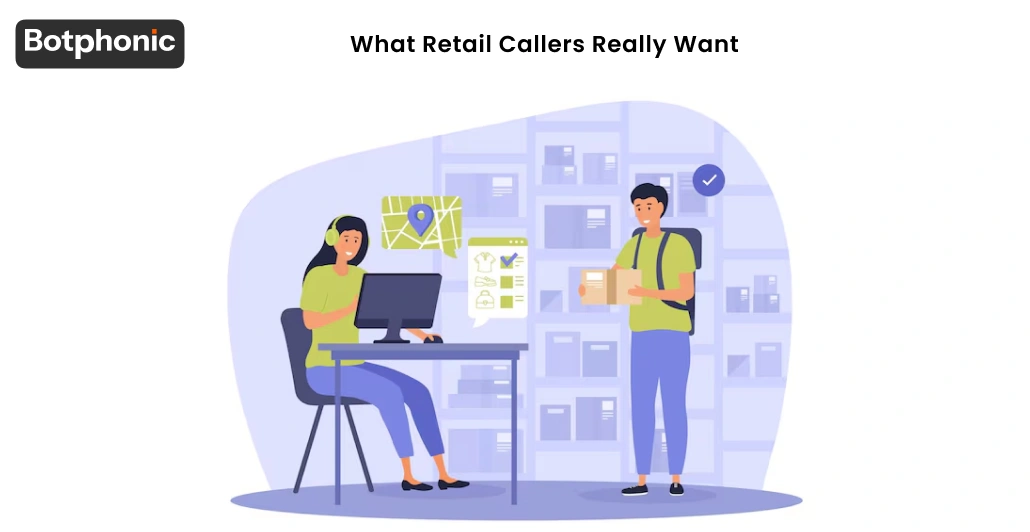
“The most common types of calls that are made in the retail phone traffic are those which are found to be concentrated in a few categories. Most of them are product availability, callers desire to find out whether a particular item is available in stock prior to making a visit. Even in the Google My Business age, the hours and location queries are also high volume. For custom order requests, pricing inquiries, and gift recommendations requests. A large range of calls is that of repair and service status that retailers provide.
Such types of calls are answered based on the information that the retailer have. Such as:
- Inventory system
- POS system
- General body of knowledge.
A smart AI call assistant linked to these systems will be able to answer most of them correctly and instantly, without any human intervention.
In human assessment and complex custom order fewer portion of the calls are involved. Meanwhile a complaint, or unusual product enquiry can be further shifted to a staff.
The Sales Call Scenario: The Change in the Result of AI
Consider a common scenario.
One of the customers is sitting back at home on Sunday afternoon planning a project. They would like to know whether a particular product is available in the local store and not drive 25 minutes to purchase it.
Without AI the scenario proceeds:
- They call the store.
- When the store is busy and the phone is put on voicemail.
And now, the customer has an option to drive and run the risk of making a wasted drive to the store. Or, customer can order through an online retailer. A retailer who knows the status of its inventory.
But, with AI the scenario can be:
- The call is answered instantly
- The customer enters the name of the product or SKU
- AI proceeds in real-time to check the inventory system
- Confirms the availability to the customer to make the trip.
It is the sale that took place due to the conversation. Hundreds of times per week, that situation is repeated in heavy-traffic specialty retail settings. The overall effect on the revenue of such calls being regularly taken versus regularly missed is considered substantial.
 PRO TIP
Managing Peak Period Call Overflow
The retailers are aware that there are times of the year when there are call peaks that a set workforce cannot accommodate. For instance,
- The black Friday weekend
- The weeks preceding Christmas
- The Mother Day weekend of the florist and gift retailer
- The Valentine Day weekend of the jewelry stores
These predictable peaks cause problems of call abandonment that are consistent every year.
1. Challenges with Temporary Employees
Instead of contracting temporary employees to service the call volume during such times incurs
- Training expenses
- Management overheads.
Meanwhile, the fact that temporary employees are not always as well informed as permanent employees, an AI answering service can absorb the excess.
2. How AI Handles Overflow Calls
Calls at peak time can still be answered meaningfully with AI. The AI:
- Responds
- Answers the question of the caller
- Gathers contact and purchase intention data to make follow-up calls
- Lets the caller have a positive experience with the brand
After-Hours Revenue Protection
The customer desire in retail does not cease at the time of closing. A good percentage of the purchase decision-making occurs during:
- The evening when people arrive home after work
- Reflect on what they require
- Consult their time tables
- Appreciate the idea of calling a retailer to clarify something to know what they want.
Customers will consider to call at 8pm, assuming the retailer will be online at 6pm. Voicemail-only response results in sale being put online.
How AI Receptionists Capture After-Hours Opportunities
An AI receptionist answers those evening calls. It is able to verify hours, inventory check, gather contact information, pre-order or reservation requests and even make an appointment the next day in-store. These after-hours interactions would otherwise lose all their revenues.
How Botphonic Supports Retail Businesses
Botphonic is designed to interface with the real systems. Such as,
- POS platforms
- Inventory control platforms
- Appointment booking applications
Why Real-Time Integration Matters
Such that the artificial intelligence receptionist is not responding off a pre-written script but rather off real time, corrective information. It is what distinguishes between a system.
Example of System Capability
| System Type | Example Response |
| Script-based system | We have a category of products |
| Fully integrated system | Yes, we have three units of that particular item in stock |
The technical specification that matters most to retailers considering the use of AI receptionist is the level of integration with the current retail systems. Shallow integration has shallow outcomes.
Customer Experience Issues
Other retailers are concerned that directing the calls to an AI will be impersonal or will alienate those customers who are more used to working with a human being. It is a valid point of concern, but judging by the results of retailers who have implemented such systems, the attitude of callers to an AI answering instantly and aiding them is much better than:
- A hold queue
- A voice mail request.
What Creates a Bad AI Experience
It is not the bad experience of the AI, it is an AI that is not able to:
- Provide the answer to the question
- Solve the inquiry.
A functional system with relevant information which is correct and helpful gives a positive impression of the retailer even in cases where the caller is aware that they are talking to an automated system.
Proper System Configuration
The trick is that the system should be configured to:
- Do well what it can do well,
- Fall gracefully and swiftly what it cannot.
AI receives helpful information. Connecting the system to a knowledgeable human within a minute of the phone call results in a more pleasant experience.
Get Answers in Real-time with AI Receptionist
Schedule a demo!Conclusion
Retail AI receptionists not only respond to calls. But it also safeguards revenue that would have been wasted in voicemail. The initial step in doing so is determining the magnitude of the issue in case the retailers have not previously measured their call abandonment rate. The argument of AI-facilitated call processing is mostly intuitive to people who already possess it.
The issue of missed sales calls can be resolve. The intelligence AI sales assistant is one of the most direct means of resolving it. The retailers already on these systems are not simply taking more calls but they are also turning around more of the demand that they never served but that flowed through the door.