

The State of Conversational AI & Voice Technology in the USA

Conversational AI is not just an experiment but a well-known innovation. In the U.S. market, it has crossed the line from just being an innovation to operational infrastructure. Voice AI is now the fastest and scalable interface for real customer work.

Built for public service use

High-volume call handling

Compliance-first design

Accessible & multilingual support

TCPA
HIPAA
FCC

    What Is Conversational AI?

    Conversational AI is a class of technologies that has allowed machines to interact with humans, using natural languages. Doesn’t matter if it’s spoken or written, it understands the context, and responds to it naturally in the smartest way possible.

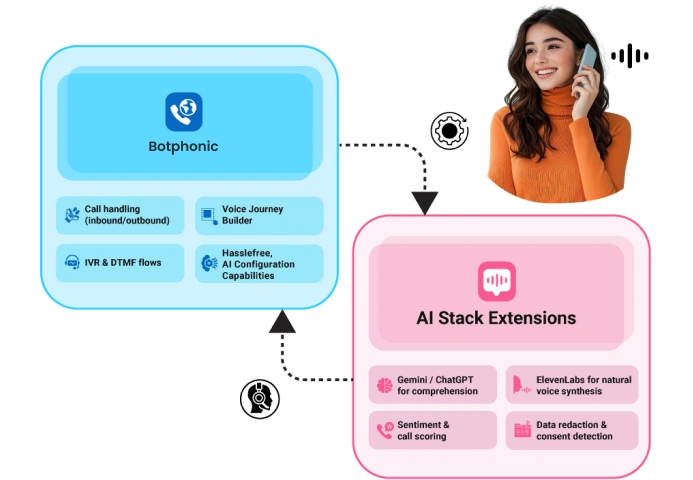
    To put it in practical terms, conversational AI is a system of systems that has combined language models, speech technology, orchestration logic, and lastly business rules.

    Core Components Explained

    In the U.S., conversational AI adoption has increased their attention towards voice-first automation, especially for calls that were historically handled by IVR or human agents.

    Why Voice AI Is Accelerating in the U.S.

    Voice AI adoption in the U.S. is a smart response to economic pressure, customer expectations, and regulatory clarity. Businesses have started to realize that voice interactions are much faster, human, and undoubtedly scalable than traditional channels such as IVR or chatbots.

    Rising Labor Costs
    High wages and turnover makes automation a smart decision, voice AI effectively reduces cost per interaction without even sacrificing experience.
    24/7 Availability
    Consumers and clients have their own expectation of support around the clock, and voice AI ensures coverage without adding new staff.
    Maturity of Speech Recognition
    Modern speech recognition has gotten accurate enough to know accents and background noises, while working on it, it removes an old barrier.
    Preference for Voice in Urgent Interactions
    Customers tend to naturally pick on voice when speed and clarity matters, phone call actively beats typing in high-stakes scenarios.

    Major Conversational AI Trends in the USA

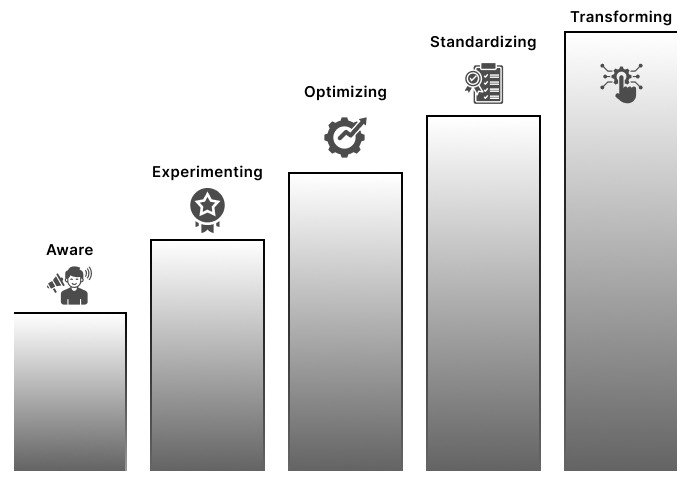
    The U.S. market for voice AI is moving fast. The companies experimenting with the same have turned into strategic deployment. Businesses are no longer interested in traditional methods, or discussing whether we should integrate AI or not? But they are questioning, how fast can they scale? The following trends highlight where value is being created :

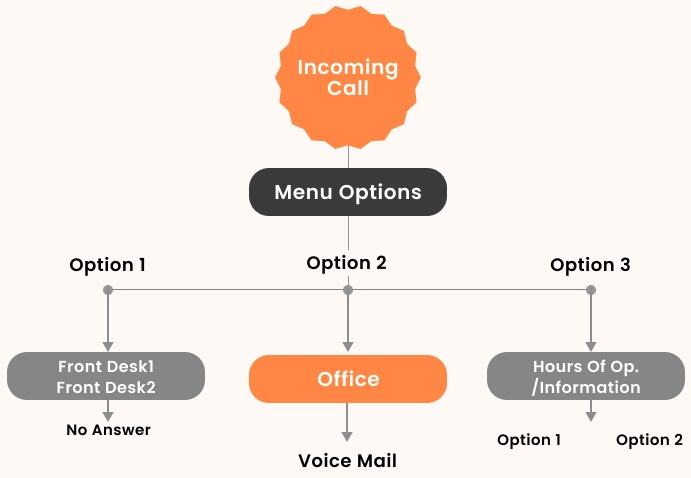
    AI Voice Agents Replacing IVR

    Legacy IVR systems have always been rigid and slow. Whereas AI voice agents have been replacing menu trees with open-ended conversations that allow customers to speak naturally. And they are even able to get faster answers, while businesses have seen reduced call handling time.

    AI Voice Agents Replacing IVR   Botphonic

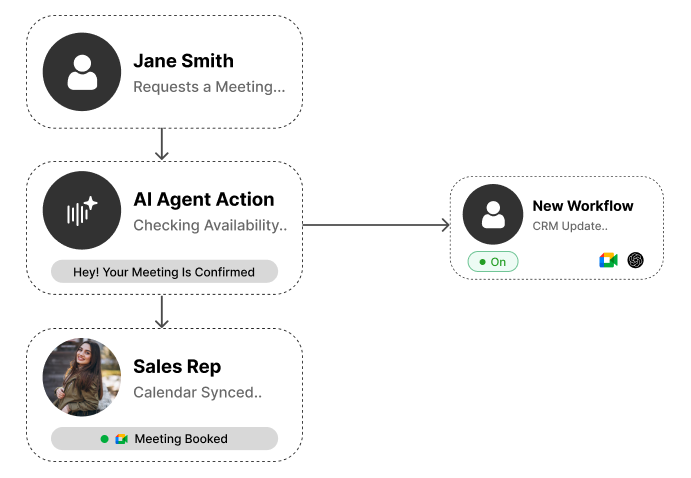
    Voice AI Moving Beyond Support into Sales & Operations

    Helps manage outbound campaigns, lead qualifications, and allows operational automations. Voice AI has enabled companies to leverage technology for proactive engagement across sales, marketing, and operational workflows. Enables faster response rates directly improving conversion rates and freeing up human representatives for high-value interactions.

    Voice AI Moving Beyond Support Into Sales & Operations   Botphonic

    Industry-Specific Voice AI Adoption

    There are voice solutions that rarely scale when there are unexpected surges. Industry-specific implementations allow for measurable ROI by integrating compliance, terminology, and workflows that are unique to the sector. For healthcare, it helps with appointment reminders, intake processing, and even follow-up calls. In finance, it assists with regulatory-compliant customer service, fraud alerts, and account management as well. And in real-estate, it enhances speed-to-lead, open house follow-ups, and also after-hours inquiries.

    Industry Specific Voice AI Adoption   Botphonic

    Compliance-First AI Design

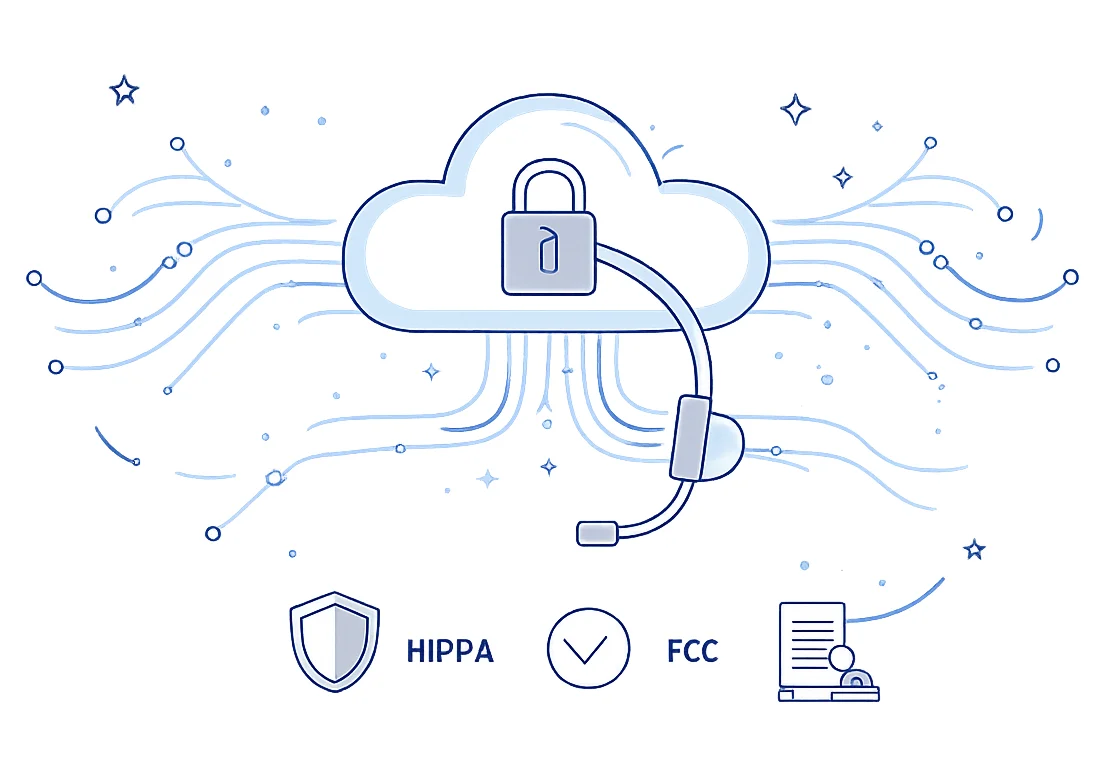
    In the U.S., non-compliant AI can easily become a liability no one asked for. Leading solutions have started embedding compliance into every layer of the system. Starting from call recording to consent tracking, everything is covered. It helps build trust with customers, and ensures every interaction is auditable and defensible.

    Compliance First AI Design   Botphonic

    Support Automation Without Losing the Human Touch

    ChannelKey StrengthsLimitationsExamples
    ChatbotsFast, low-cost, easily deployable for text-based interactionsNot ideal for urgent, complex, or nuanced conversations; limited emotional understandingWebsite FAQs, simple support, lead capture forms
    IVR (Interactive Voice Response)Structured, predictable, works with regulated call flowsPoor customer experience; frustrating menu trees; limited personalizationAppointment scheduling menus, payment reminders, basic call routing
    Voice AINatural, human-like, immediate responses; can handle complex dialogue; scalable for high volumesRequires compliance with U.S. regulations (TCPA, FCC) and careful monitoring; initial setup investmentCustomer support, outbound campaigns, lead qualification, healthcare reminders
    Get Started

    Try Your AI Customer Service Agent Now

    Discover how Botphonic AI automation has helped businesses across industries achieve measurable success.

    Customer Support
    Sales Qualification
    Voice AI Agent
    Granting loans to customers and managing money for future transactions. Utilized Botphonic Voice AI Agent for client interaction at scale and examining data in a few seconds.
    +30%
    Churn Reduction
    +32%
    Enhance Client Satisfaction
    20%
    Decrease Customer Costs

    Renowned CRM Platform   Botphonic
    Lead Reactivation
    Client Retention
    AI Call Assistant
    By using Botphonic AI call assistant, a tech company automated lead re-engagement across different regions and boosts sales conversion. The AI re-engaged cold leads with human-like conversations, qualified demand across regions and languages, and most importantly increased conversions.
    +40%
    Response Rate
    60%
    Minimize Workload
    30%
    Enhance Qualify Leads

    Lead Reactivation   Botphonic
    Call Management
    Instant Notifications
    Voice AI
    A leading digital marketing company replaced traditional customer communication methods with Botphonic’s Voice AI agents to respond quickly across regions and channels. AI helped them handle high inquiry volumes, delivered professional, and personalized responses.
    +82%
    Managing Client Queries
    +40%
    Minimizing Agents Costs
    +20%
    Uplifting Workforce Productivity

    Call Management   Botphonic

    How U.S. Businesses Can Prepare Now

    Audit Current Call Flows

    Audit Current Call Flows

    Map every interaction to understand complexity, volume, and repetitive patterns.
    Identify Automatable Conversations

    Identify Automatable Conversations

    Focus on high-frequency and low-risk calls such as scheduling, reminders, or FAQs, while maximizing ROI.
    Ensure Compliance Readiness

    Ensure Compliance Readiness

    Verify TCPA, FCC, and state regulation integration into workflows.
    Pilot AI Voice in Low-Risk Workflows

    Pilot AI Voice in Low-Risk Workflows

    Start small with controlled deployments for critical calls, and allow testing, iteration as well as performance measurement.
    Measure ROI Early

    Measure ROI Early

    Track metrics like call resolution, conversion, and cost per-interaction.
    Audit Current Call Flows

    Regulatory Trends Shaping Voice AI in the U.S.

    • TCPA Enforcement Evolution : The Telephone Consumer Protection Act is enforced in all industries, ensuring U.S. businesses manage automated calls carefully.
    • FCC Robocall Scrutiny : The Federal Communications Commission is looking strictly over robotcalls, as AI-driven calls must comply with call authentication.
    • Transparency in AI-Generated Voices : U.S. regulations and customer expectations are demanding AI voices to be clearly disclosed that they are automated.
    • Consent-First Architectures : Leading voice AI platforms have embedded consent capture and logging at every step, ensuring all interactions comply with TCPA, FCC, and state-specific requirements.
    U.S. Compliance  HIPAA, TCPA, FCC

    Adoption Trends by Industry (USA)

    Healthcare
    Streamlines patient scheduling, reducing administrative burden. Meanwhile automated reminders and confirmations help reduce no-shows
    Real Estate
    Instantly contacts new leads, increasing lead conversion, and ensures timely communication for showings and clients inquiries
    Call Centers
    Voice AI handles routine questions and routes complex calls to humans, reducing workload and improving response time
    SMBs
    Ensures every incoming call is answered and enables small teams to handle high call volumes
    pattern

    Seamless AI Voice Automation Integrations for Public Sector Systems

    Botphonic is built to plug cleanly into existing public sector infrastructure, integrating with CRM and case management systems, scheduling platforms, public information systems, and data and reporting tools.

    See all integrations

    activecampaign
    asana
    salesforce
    slack
    clickup
    excel
    intercom
    pipedrive
    monday
    zoho
    zendesk
    hubspot
    zapier
    make

    Ask Us Anything

    What is conversational AI?

    Conversational AI is a technology that allows machines to communicate with humans in their own language. It allows natural conversation via voice or text, using speech recognition, NLP, dialogue management, and AI reasoning.

    How is voice AI different from chatbots?

    Voice AI enables real-time, spoken interactions with natural conversations, whereas chatbots are text-based and limited in handling urgent or complex queries.

    Is voice AI replacing IVR in the U.S.?

    Yes, many U.S. businesses are shifting from menu-driven IVR systems to voice AI for faster interactions.

    Which industries are adopting voice AI fastest?

    Healthcare, finance, real estate, and call centers lead adoption due to their high call volumes, regulatory requirements, and time-sensitive interactions.

    Is conversational AI regulated in the U.S.?

    Yes, it is regulated via TCPA, FCC, and state regulations, governing consent, automated calling, and transparency in AI-driven communication.

    What is the future of voice AI?

    Voice AI will smartly evolve into proactive, multimodal, and hybrid human+AI systems that act as digital employees, driving efficiency, personalization, and compliance across industries.

    How much ROI can businesses expect from voice AI?

    ROI varies depending on use cases, but generally its benefits include reduced handle time, lower labor costs, improved lead conversion, and enhanced customer satisfaction.

    Is voice AI secure for sensitive industries?

    Yes. Secure implementations include encryption, role-based access, and audit logs making them suitable for regulated sectors like healthcare and finance.

    Ready to Improve Public Service Communication?

    See How AI Voice Automation Helps You Serve More People.