
Summarize Content With:
Summary
Contact center automation has now transformed from being a simple cost-saving aspect to a core factor that drives customer experience (CX), operational efficiency, and also business scalability. As call volumes grow so as the customers’ expectations, and here AI-driven contact center automation enables organizations to manage interactions smartly, while reducing agent workload and maintaining service-level targets without even escalating overall cost.
In this blog, we are going to explore what contact center automation actually is, the technologies that make it and the benefits it delivers. Meanwhile, we will also look out for the best practices for implementing it along with real-world industry use cases.
Introduction
We can see modern businesses are under constant pressure to deliver fast and personalized customer support across channels. However, many contact centers are still relying on outdated tools, disconnected systems, and manual workflows and it’s showing the struggle to keep pace with growing demand. Moreover, the result is also operational efficiency, which is declining contact center performance, and smartly rising customer frustration.
By smartly leveraging AI receptionist, organizations can easily move beyond reactive support models and just adopt intelligent, scalable solutions that improve both agent productivity and customer satisfaction.
Why Traditional Contact Center Models Are No Longer Sustainable
Contact centers are actively facing increased pressure as customer demand is growing faster than their operational capacity. Customers are now expecting quick responses, accurate information, and consistent service across channels. Although, many contact centers are still operating on traditional infrastructure that was built for lower volumes and simple workflows. Moreover, these systems used to rely heavily on manual processes and inefficient applications, which had limited their ability to scale.
Even Webex has predicted that by 2025, only specialized tasks are going to be managed by humans. Meanwhile with technology innovations, it will smartly enhance agent experience. As per their global study, it has been shown that about ¾ of contact center leaders have agreed that agent experience has a significant impact on customer experience.
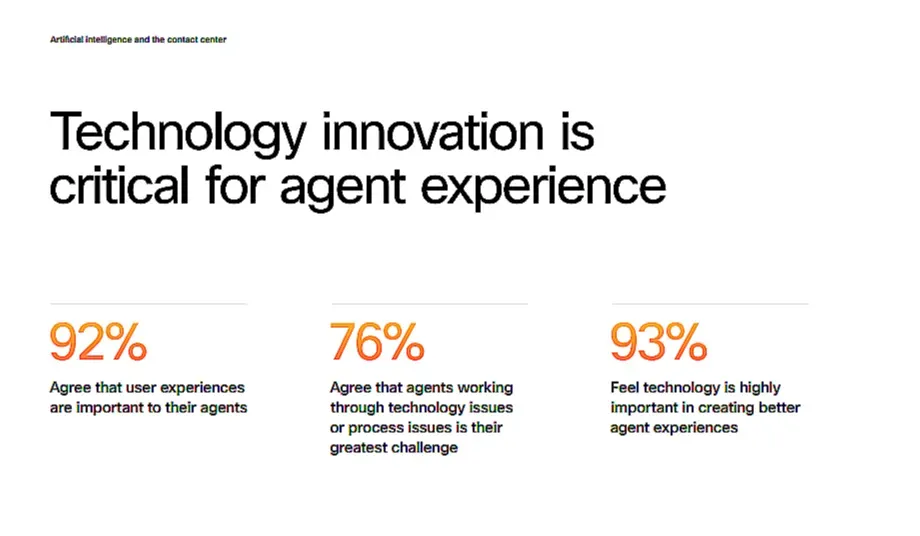
Increased call volumes has always revealed the structural limits of the call centers. Even during seasonal peaks or unexpected surges contact centers used to experience:
- 20-30% increase in call abandonment
- Missed service-level targets
- Higher escalations rates due to rushed or incomplete resolutions.
What Is Contact Center Automation?
Contact center automation enhances operational efficiency and reduces human involvement in routine tasks significantly. With AI appointment booking, it effectively manages call routing, customer verification, ticket creation, post-call tasks, and even follow-ups without any manual input.
To deliver these outcomes consistently, contact center automation depends heavily on smart integrated technology stack. Each component plays a specific and important role in reducing friction, improving accuracy, and enabling scalable customer engagement.
Core Technologies Powering Contact Center Automation
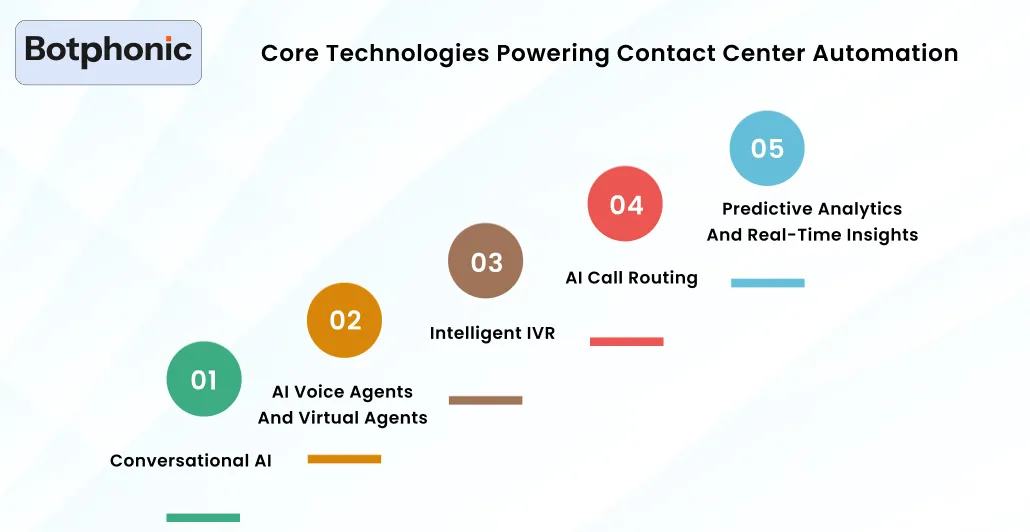
Effective contact center automation is not just built on a single AI capability. It is driven by a coordinated set of technologies that actively work together to improve operational efficiency, customer experience, and also agent performance.
Conversational AI
Conversational AI is the main component that forms the foundation of modern AI-driven contact center automation. Moreover, it also enables the system to interact with customers in natural language across voice and other digital channels.
- Understands customer intent using NLP
- Supports AI customer service via chat and voice interactions
- Enables self-service automation for routine inquiries
- Reduces agent dependency and supports agentless interactions
Moreover, this also helps in improving response speed while lowering cost per interaction.
AI Voice Agents and Virtual Agents
AI voice agents and virtual agents are now handling high-volume customer interactions without any human involvement. It actively helps in:
- Providing 24/7 support
- Handing FAQs, appointment scheduling, or any routine tasks
- Scaling instantly during call volume spikes
- Supporting customer self-service across time zones
These agents actively help in reducing queue times and assists stabilize service during demand surges.
Intelligent IVR
Unlike legacy systems, intelligent IVR adapts based on customer intent and historical data.
- Integrates with CRM
- Enables faster resolution
- Improves first call resolution
- Routes callers based on intent recognition
It helps in minimizing repetitive interactions and improves overall CX consistency
AI Call Routing
AI call routing operates by using real-time data to connect customers with the most responsible and suitable agent for the query in question.
- Considers intent, sentiment, agent skill, and availability
- Reduces unnecessary escalations and transfers
- Lowers average handle time (AHT)
- Supports workforce optimization and better resource utilization
Accurate routing improves customer outcomes and agent efficiency.
Predictive Analytics and Real-Time Insights
Predictive analytics allows contact centers to shift from reactive to proactive operations.
- Forecast demand and smartly optimize staffing using historical trends
- Identify potential service bottlenecks before they even grow
- Enable proactive engagement with customers
- Support better performance against service-level targets
These insights help leaders manage growth without increasing operational overhead.
Why the Technology Stack Matters
Each technology addresses a specific operational challenge that companies are facing, but they should know the real value comes not just from this but from integrations. These systems help in reducing friction, improving consistency, and create a scalable foundation for CX automation.
 PRO TIP
Key Benefits of Contact Center Automation
Contact center automation delivers value only when it directly improves performance, reduces operational strain, and also supports sustainable growth. When it’s applied with discipline, it addresses both customer experience and internal efficiency without even increasing any complexity.
Improved Operational Efficiency
Automation works in removing friction from everyday workflows and reduces reliance on manual processes.
- Automates repetitive tasks such as call routing and in ticket creation
- Reduces operational inefficiency caused by disconnected systems
- Lowers average handle time (AHT) and post-call work
It also assists in creating a more predictable and scalable operating model.
Faster Resolution and Higher First Call Resolution (FCR)
Understanding intent on the first call and routing it accurately, enables automation to reduce unnecessary delays.
- Intelligent IVR and AI call routing links customers to the right resolution path
- Conversational AI manages routine inquiries without any agent involvement
- Fewer transfers and repeat calls
- Measurable improvement in first call resolution (FCR)
Faster resolution even helps in directly improving customer satisfaction and reduces ticket backlogs.
Reduced Agent Burnout and Turnover
Automation enables enhanced agent experience by eliminating low-value and repetitive work.
- Shifts agents away from daily queries to meaningful interactions
- Reduces cognitive load which is caused by information overload
- Offers real-time insights and system-assisted guidance
- Enhances agent productivity and job satisfaction
With lower agent burnout it leads to reduced agent turnover, which protects institutional knowledge and lowering hiring costs.
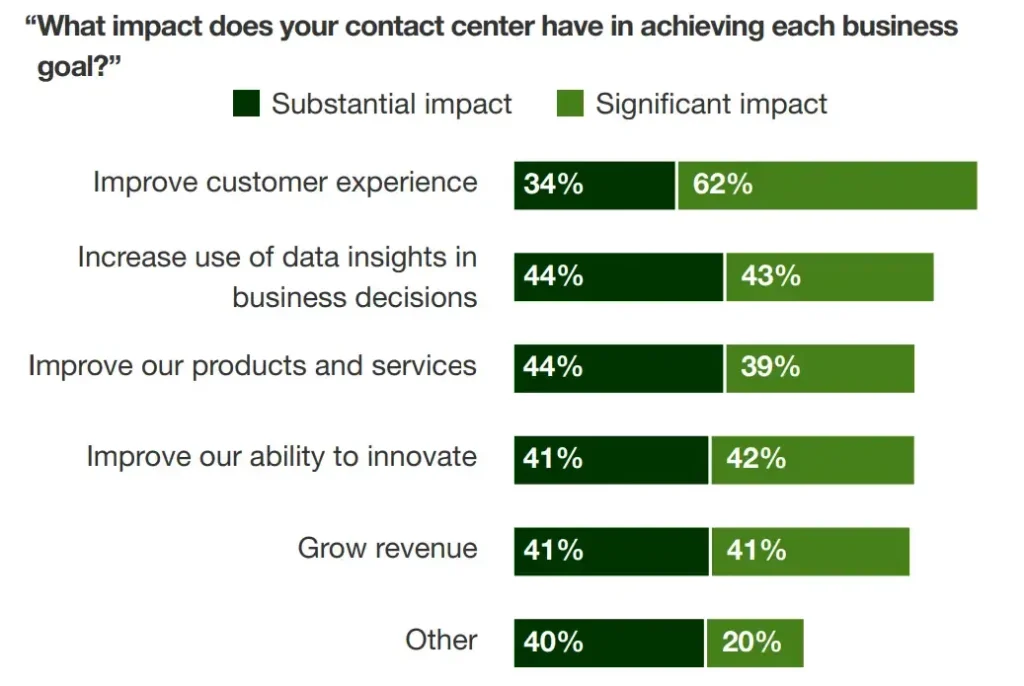
Even in research it has been shown that about 80% of respondents have agreed that automation helps them in increasing agentless interactions.
Lower Cost Per Interaction
Automation reduces the cost of managing each client interaction.
- With agentless interactions cost significantly less than a live-agent calls
- RPA reduces times spent on administrative work
- Fewer escalations and repeat contacts are made
- Improved utilization of existing force can be done
The end-result is usually a measurable reduction in cost per interaction.
Stronger Customer Experience (CX)
With automation it smartly improves CX by removing friction not humans.
- Faster response times and consistent service is offered
- Increased access to customer self-service options
- Enables better alignment across channels through CX automation
Best Practices for Implementing Contact Center Automation
Understanding the benefits of contact center automation is the first step towards learning and deploying it. The real value comes from smart implementation, where technology, people and processes are aligned to deliver measurable business outcomes.
1. Invest in Workforce Enablement
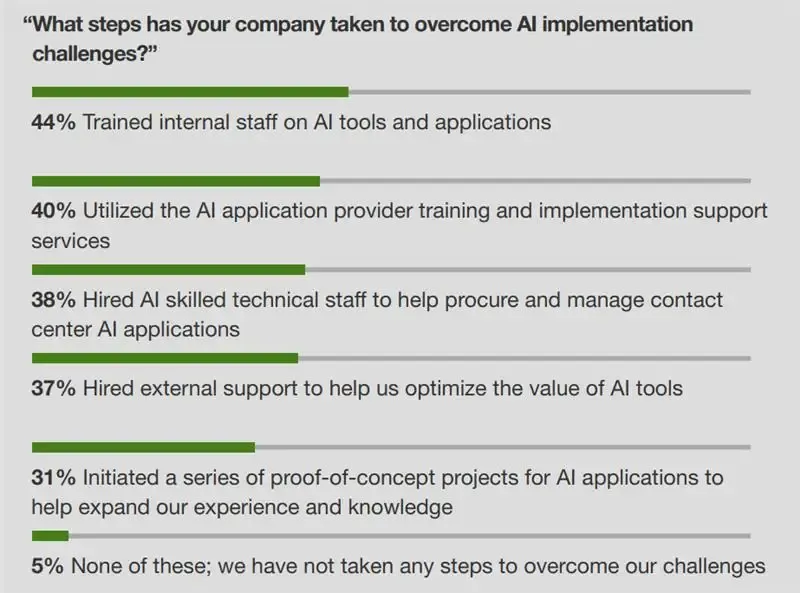
Training employees and users is one of the most common and effective response to AI implementation challenges . When asked it was seen that about:
- 44% of organization have focused on training their internal staff on AI tools and applications
- Companies have focused on agent enablement and operational confidence
- Has resulted in reducing resistance by positioning AI as a productivity tool
Contact center automation works by delivering results only when agents and supervisors acknowledge how to cooperate with AI-powered contact center systems in real workflows.
2. Leverage Vendor Expertise Strategically
There are many organizations that have already recognized that internal teams do not actually need to solve AI adoption alone.
- About 40% use AI application provider training and implementation support
- AI accelerates time-to-value and reduces configuration errors
- Ensures alignment with best practices in AI-driven contact center automation
Vendor support is one of the most effective ways when it’s used to establish a strong operational baseline but not as a permanent dependency.
3. Strengthen Technical Ownership and Governance
AI initiatives are required to have dedicated ownership to scale reliably.
- 38% of companies are hiring AI-skilled technical staff to manage contact center AI applications
- Enhances integration across CRM, WFM, and backend systems
- Reduces risk from disconnected systems and manual workarounds
Clear technical accountability improves system stability, security, and long-term operational efficiency.
4. Use External Expertise to Optimize ROI
Some organizations have even decided to bring in outside specialists to move faster and avoid any expensive mishaps.
- 37% engage external experts that helps them optimize the value of AI tools
- Helps identify high-impact automation opportunities
- Supports measurable improvements in AHT, FCR, and cost per interaction
This approach is also considered as effective during early scaling phases.
5. Start Small With Proof-of-Concept Deployments
Even in corporate industries controlled experimentation remains a practical adoption strategy, which helps in making a strategic decision.
- 31% run proof-of-concept projects that expands AI experience
- Allows teams to validate use cases before full rollout
- Reduces disruption while building internal confidence
Targeted pilots like self-service automation or AI call routing also assists organizations prioritize what to automate.
 NOTE
NOTE
Industry Use Cases
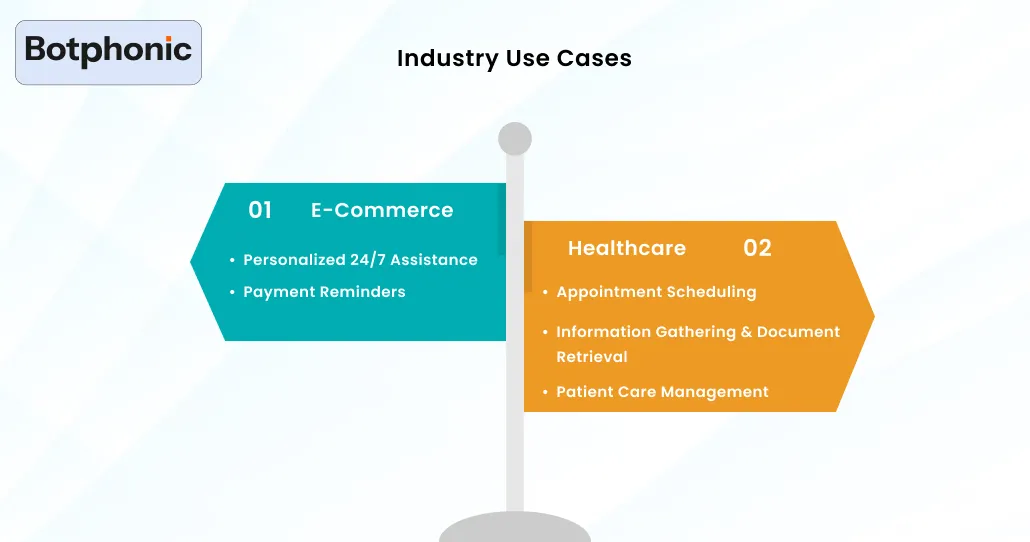
Here I curated a list of some successful accomplishments of implementing AI omnichannel contact center solutions. Let’s check out:
1. E-commerce
Online shopping sites leverage AI call assistant and IVR systems for order tracking, FAQs, and managing the return process; this improves both customer engagement and confidence. By utilizing NLP and machine learning bots, businesses can provide customized solutions to customers around the clock.
Further, customers can address issues even at midnight, and AI agents will deliver them active support. According to the Economist, these are the most profitable AI use cases in business.
- Personalized 24/7 Assistance: One of the smartest benefits of AI is that they offer 24/7 assistance, which actually helps in addressing client queries efficiently.
- Payment Reminders: AI answering services are now getting integrated into banking systems that help them automate the journey of payment processings and reminders.
2. Healthcare
Leveraging AI voice assistant in health centers makes customer interaction incredibly intuitive. According to SpruceHealth, a doctor usually attends 53 calls per day, and they allocate a total of 66 minutes to handling calls.
Further, Medbelle reports state that it takes 1-2 days for answering common inquiries of patients.
- Appointment Scheduling: AI virtual assistants can automatically take over the repetitive admin work, such as rescheduling, cancellation, appointment booking, and more; this lessens the manual errors.
- Information Gathering & Document Retrieval: Also, they can accumulate pertinent data about patient information and directly incorporate it into the system.
- Patient Care Management: By applying AI and machine learning algorithms in the system, patients can easily examine their medical updates, take wellness information, and request pharmaceutical refills.
Putting Contact Center Automation Into Practice With Botphonic
Understanding where automation fits is only half of the equation. Execution is one the main parts where contact center initiatives succeed or stall. Botphonic is designed to operationalize whole contact center automation in a way that is controlled, scalable, and aligned with real business workflows.
- AI Voice Agents: Helps in managing inbound and outbound calls at scale.
- Conversational AI: Supports customer self-service and agentless interactions.
- Intelligent IVR: Smartly operates in improving first call resolution and lowers average handle time (AHT)
- AI Call Routing: Routes callers based on their intent, context, and urgency
- Workflow Automation: Assists by automating ticket creation, CRM updates, and follow-ups
- Real-Time Insights: Tracks KPIs such as AHT, FCR, containment rate, and also cost per interaction
- Performance Visibility: Provides assistance in monitoring agent productivity and customer sentiment
- Enterprise-Grade Security and Compliance: Our platform is built for regulated environments where data protection and auditability is non-negotiable.
- Scale and Workforce Enablement: It enables contact centres to grow without any increasing complexity.
Scale securely and grow exponentially
Try Demo Now!!Conclusion
Contact center automation has become one of the most essential tools for organizations who are searching for balance to grow customer experience, operational efficiency, and scalability. As interaction volume is growing and service expectations are on rise, IA-driven automation has enabled contact centers to meet demand without even worrying about costs or overburdening agents.
When applied with clear use cases, strong governance, and workforce enablement, automation is what delivers measurable improvements in resolution speed, agent productivity, and CX consistency. Botphonic makes this change practical and helps organizations move from experimentation to execution with secure and scalable contact center automation.