Summarize Content With:
Quick Summary
Quick snapshot of where AI Call Automation Trends USA are at in 2026, according to rates of adoption and business impact from around the country:
- U.S. SMBs still leading surge in AI voice adoption: Many more small and medium-sized businesses are now intending to deploy AI voice systems to help them grow, cut down on missed calls, and even assist customers outside of conventional working hours.
- Buying decisions driven by compliance-led automation: Corporations regard HIPAA, TCPA, and FCC compliance as trust signals to secure the brand and increase customer satisfaction with robo-calls.
- LLMS and voice systems play well together: Gigantic language models actually underpin instantaneous comprehension, summaries and intent detection, which is why AI on the phone feels more natural or useful.
- ROI becomes measurable in less than a year: The numbers prove it: AI auto calls can provide a 240% return within 12 months by reducing costs and increasing retention.
Introduction
Imagine: A client calls a business at 8:30 PM and receives clear responses, polite replies, and immediate assistance. No waiting. No voicemail. And that tells us why the AI Call Automation Trends USA will still deluge various industries in 2026.
AI Call Automation is defined as voice-based artificial intelligence systems that can handle incoming and outgoing customer telephone calls for U.S. businesses. These systems respond to queries, schedule appointments, qualify leads and route calls while slashing operational costs and enhancing customer experience.
This shift is not guesswork. 71% of U.S. small and midsize businesses will have adopted some type of voice automation by 2026, Gartner research found.
American businesses are grappling with increased call volumes, higher labour costs and the pace demanded by customers. Traditional call centres can’t keep up. Routing calls to IVR relies on the availability of voice resources; AI voice automation solves this problem by providing a predictable, reliable service.
The closer we get to 2026, the more evident AI Call Automation Trends USA become. To enable companies to do more without growing the team size, they need smarter calls, faster resolution and increased customer satisfaction.
In the following blog, we look at the most pervasive trends setting the AI-related call automation agenda in the United States this year.
Rise of Industry-Specific AI Call Agents
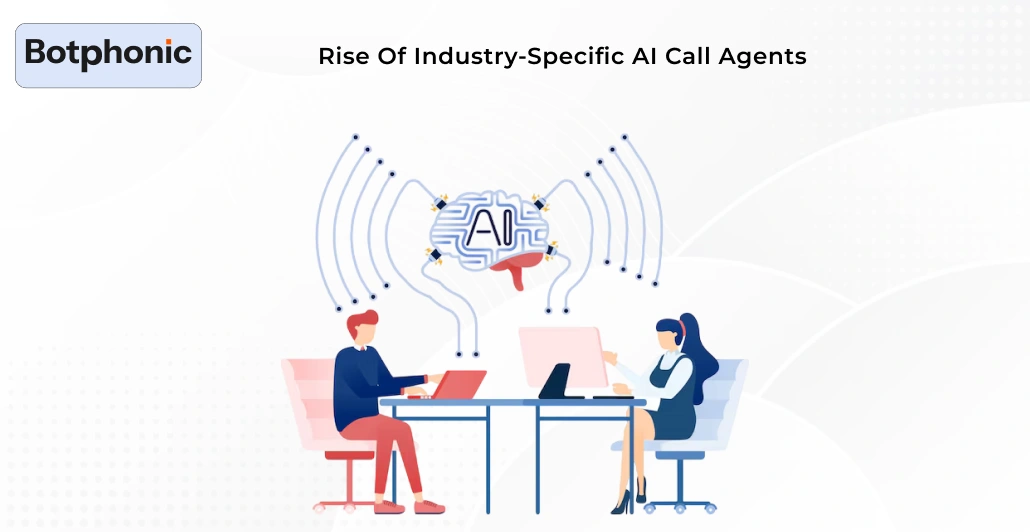
According to the AI Call Automation Trends USA, one of the most prominent trends that is likely to take place in 2026 pertains to generic voice bots. American companies now want industry-specific artificial intelligence call agents that get their workflow, language and compliance rules.
Most of the general bots fail because they treat all callers alike. AI agents trained in industry reply contextual, accurate and confident. Ironically, these agents sound real because they follow the patterns of conversation from particular sectors.
Domain knowledge-trained AI call agents for specific industries that are trained on industry-specific terms and regulatory frameworks.
How Different Industries Use AI Call Agents:
- Healthcare: Providers employ AI calls to verify appointments, send reminders and reschedule visits. The AI is trained in medicine and concepts like patient privacy. Clinics reduce no-shows and the workload for staff without risking compliance.
- Real Estate: Real estate companies employ A.I. for follow-ups after property tours, answering availability questions and scheduling agent callbacks. This setup actually responds automatically, including more off-hours leads.
- Finance: Banks use AI call agents for low-risk identity checks, balance alerts and simple account queries. These agents go through rigorous verification checks and diminish the wait periods of the clients.
Hundreds of U.S. companies today choose to have industry-specific AI receptionists instead of phone routing tools. You can follow how this is playing out for American companies here:
This demonstrates that Automation AI Call Trends US is now concerned with accuracy and trust rather than only automation speed.
 PRO TIP
Integration with CRMs and U.S. Business Tools
Another key enabler for AI Call Automation Trends USA is a greater level of integration with everyday business software. No more do AI call assistant operate in isolation. They integrate directly with the CRM and customer support tools used by U.S. teams.
Commonly Integrated Tools
- Salesforce
- HubSpot
- Zendesk
- Zoho
These connections enable AI calls to automatically log conversations, update records, assign tasks and schedule follow-ups. Each call is turned into structured data that teams can review and follow up on.
When AI meets CRMs, businesses stop taking a stab in the dark. Sales know which leads responded to phone calls. Service teams follow customer history in real time. Supervisors track calls, with no manual reporting.
How to Integrate AI Call Automation for U.S. SMBs:
Here is a straight-shooting and pragmatic process that mirrors actual U.S. business network configurations:
- Choose your CRM: Begin by finding the system that your team already uses. AI tends to work best when it slots into existing workflows rather than overturning them.
- Connect to the API or the VoIP line:Connect your phone system or VoIP provider to the AI platform via secure API, so data sharing can occur in real-time.
- Map call workflows: Decide how calls should flow. Clearly set up triggers, actions, escalation rules and follow-on actions.
- Train model on U.S. data: Employing American Accent, American terms, and call behaviour to make them understand well and feel comfortable.
- Launch compliance-verified campaigns: Will also test calls and make sure scripts adhere to U.S. communication and privacy laws.
To learn more about how CRM integration works, check out the official HubSpot Integrations.
This trend towards integration is a testament to how AI Call Automation Trends USA now focuses on invoking concert, not just automation in siloes.
 NOTE
NOTE
Compliance-Centric Automation (HIPAA, TCPA, and FCC)
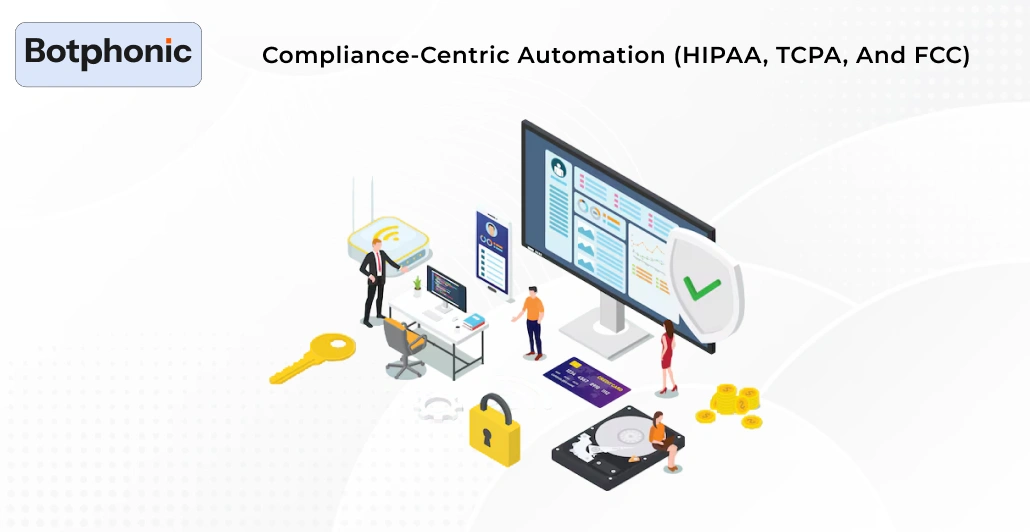
In 2026, American companies don’t view compliance as a burden. Here’s one of the Top AI Call Automation Trends USA: From being a requirement, compliance has now been turned into a weapon.
Companies used to dread the likes of HIPAA and TCPA because they thought automation increased legal exposure. That mindset has changed. The latest generation of call systems with AI in the control itself has compliance built into its architecture. Businesses that adhere to the rules earn trust more quickly and make more deals. It used to be HIPAA and TCPA as roadblocks. Now they are your differentiators.
Personal data. Among healthcare organisations, banks and services companies, there is a new focus on ethical AI as part of the customer promise. When calls follow federal and state guidelines, customers feel secure.
Why Compliance-Centric Automation Matters AI-based
call automation now comes with capabilities like getting call recording consent while starting a call, handling any opt-out requests that might have come in during the call, a secure means of storing data and audit-ready logs. Such characteristics are good for business and provide a sense of reassurance to customers as well.
When it comes to outbound calls, TCPA rules govern when a business is allowed to reach out to individuals. AI systems that adhere to appointment and consent guidelines can aid companies in dodging fines, all while ensuring a consistent line of communication.
As healthcare organisations increasingly use AI, they depend on HIPAA-compliant AI calls to secure patient data. Strong Authentication and Controlled Data Access Automation is safe for sensitive conversations.
NOTE
AI Voice + LLM Convergence
One other key trend in AI Call Automation Trends USA Big models. One of the most defining changes seen so far is the unification of AI voice systems with large language models (LLMs). In 2026, voice automation no longer depends on brittle scripts exclusively. Now, it can comprehend context, intent and emotion.
“2026 is the year when large language models and voice AI combine for real-time interactions.”
Now, beasts like ChatGPT are what drive the conversational brain behind AI calls. Voice systems process speech recognition and synthesis; LLMs interpret meaning and reason in generating natural responses during live calls.
What This Convergence Enables?
AI agents are also now able to automatically summarise calls at the conclusion of each conversation. They gauge the sentiment of callers by tone and word choice. There, they send well-organised notes straight into CRM systems without manual labour.
For instance, direct messaging AI can log critical objections, customer level of interest and next steps immediately following a sales call. Support teams get highlights of urgency and feeling cues.
This convergence improves conversation flow. Customers don’t feel corralled in scripted menus anymore. AI adjusts responses on the fly, so calls sound more human and respectful.
Why This Trend Matters in the U.S. Market
Clarity and velocity matter to American customers. LLM-powered voice AI delivers both. Companies decrease talk time and increase comprehension. This equilibrium creates adoption with sales, support, and service.
This is a significant step in AI Call Automation Trends USA as it gets AI calls closer to realistic dialogue and away from programmatic answers.
NOTE
Focus on ROI and Data-Driven Voice Analytics
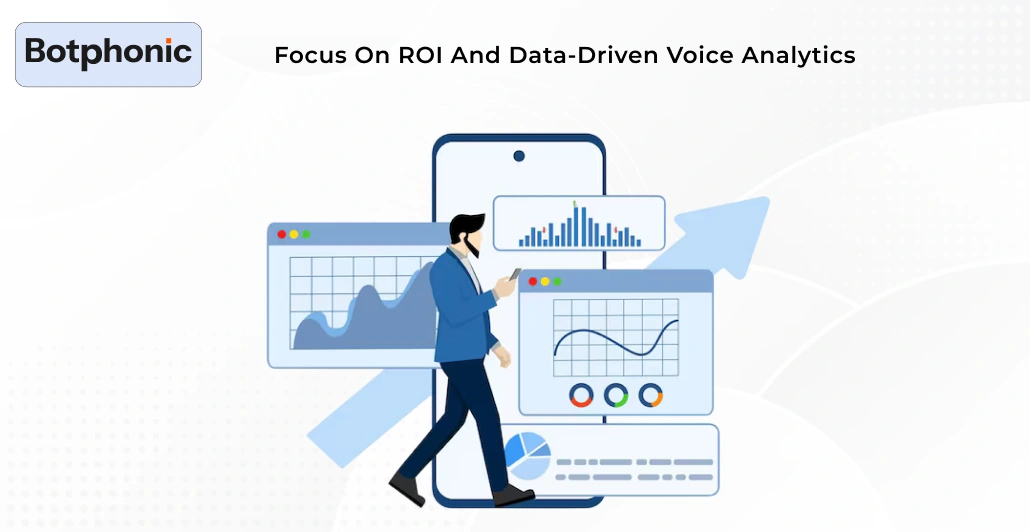
U.S. companies will stop using AI call automation based on hype by 2026. Of all the AI Call Automation Trends USA, this is probably one of the most obvious: ROI and measurable results.
Decision-makers now ask direct questions. How much does each call cost? How many calls go unanswered? What’s the frequency of customers who come back after an automated conversation? AI call platforms now have built-in voice analytics, and they offer definitive answers.
Agents can record, monitor and playback their phone calls. Collect data: Call Duration, Resolution Rates, Missed Calls, Customer Insights. Voice analytics processes it to gather information about customer behaviour. Such insights empower leaders to make the argument for automation with actual figures instead of conjecture.
Analytics can also be used to enhance scripts, modify call timing and optimise the customer journey. These changes save costs and improve retention over time.
ROI Impact of AI Call Automation (U.S. Market)
| Metric | 2024 Avg | 2026 Projected |
| Avg Call Cost | $3.70 | $1.10 |
| Customer Retention | 72% | 86% |
| Missed Calls | 20% | <5% |
| ROI | 140% | 240% |
This chart explains why you need to track performance in the USA AI Call Automation Trends now. Businesses unlock immediate financial benefit by replacing manual call processing with intelligent automation.
Cheaper calls free up budgets for growth. Fewer calls lost equals more leads caught. Better retention increases the lifetime value of a customer.
Why Data-Driven Voice Analytics Matter
Analytics transform each call into actionable data. Managers spot bottlenecks early. The sales team gets exposure to which conversations actually convert. Support teams can realise repeat issues sooner.
This data-first approach enables U.S. firms to scale automation with confidence rather than guess what will result.
PRO TIP
Check out our ROI calculator to learn what AI call automation can do to lower costs, slash missed calls and increase retention for your business.
Request a Free DemoU.S. Regional Expansion & Multilingual Voice AI
In particular, AI Call Automation Trends USA in 2026 indicates the region that is breaking new ground. Companies are now rolling out AI-driven voice systems on the basis of geography, language requirements and local consumer habits. Most crucial, this shift matters in states with diversity and high call volumes.
Spanish voice support has transitioned from a “nice to have” to an absolute necessity. Millions of U.S. consumers would choose Spanish for business discussions, particularly in service, health care and real estate. Those companies that refuse to do this tend to lose trust, and “lead.
States like California, Texas and Florida are among the leaders in adopting AI voices. These states have high population density, a robust business environment and significant bilingual communities. Multilingual AI is in use by businesses to help customers with no wait or language barrier.
AI voice systems of today will change language in the middle of a call, recognise regional accents and choose phraseology grounded in common culture. This feature provides clarity and decreases the annoyance level for your callers.
“AI voice adoption in the United States is increasing most rapidly among bilingual businesses.”
This growth enforces AI Call Automation Trends USA by emphasising that they are beneficiary-based, therefore growing in acceptance as well as use.
PRO TIP
Human + AI Hybrid Support Modes
Another important trend in AI Call Automation Trends USA is how organisations integrate the high efficiency of AI with human judgment. By 2026, no longer will businesses make a choice between people and automation. They blend both.
By 2026,three in five U.S. small and mid-sized businesses will use a hybrid model that involves AI call agents but with human oversight.
The model guarantees speed without losing empathy. AI manages rote issues, while human agents intercede in conversations that require intuition about emotions or intricate decision-making.
Common Hybrid Support Scenarios
- AI for FAQs: AI responds to FAQs with instant answers, decreasing wait times and agent workloads.
- Human for escalations: Human-operated agents replace them when a customer indicates they’re frustrated, confused or in a hurry.
- AI summaries for post-call analytics: AI drafts concise call summaries and provides insights that allow teams to do better.
Hybrid models are more consistent and help prevent burnout. They also assist businesses in maintaining service quality at peak times and low staff levels.
A solution like homecallcentreuk.com/ is a main trend of AI Call Automation Trends USA on this because it meets technology to the actual human demand.
Growth of AI Call Automation Startups in the USA
2026-Exponential Growth Picks up in AI Call Automation Trends USA Things are buzzing for artificial intelligence service providers as we churn through the year 2018. Ever more new AI voice startups are entering the U.S. market, each with tools that go to work on sales calls, customer support and appointment setting.
A number of platforms now vie in the space, such as Synthflow, RetellAI and Goodcall. These companies target various use cases, pricing models and degrees of customisation. This expansion provides businesses with a choice, but also creates confusion in the evaluation process.
A few startups have good features, but long setup times or significant hands-on technical work are needed. American companies now favour platforms which are fast to get deployed and that scale out smoothly.
This change is why companies have been on the hunt for solutions which go beyond experiments or temporary systems, into production-ready systems.
“Botphonic’s AI call automation platform is enabling U.S. businesses to go from pilot to production in weeks.”
Instead of something new, platforms compete on longevity, readiness for compliance and speed of integration. Businesses would like to see fewer delays in getting started and faster results.
This growth trend in startups reinforces AI Call Automation Trends USA, increasing innovation and raising the standard for reliability and convenience of use.
PRO TIP
Voice AI for Accessibility and Public Services
Accessibility and public service support. Another significant trend in AI Call Automation Trends USA would be on accessibility and community support. Voice AI now has the potential to bring essential services within reach of unprecedented numbers of users.
Most organisations build AI call systems to be ADA-compliant, as that means people with disabilities will have an equal opportunity. Voice interfaces assist users who have trouble with web forms or text-based tools.
AI calls are used by elder care helplines to make reminders, wellness checks, and offer basic help. The systems provide continuous availability and relieve pressure on people.
Government departments are using AI voice automation to manage high call volumes, as well. These systems handle frequently asked questions, route emergency inquiries, and even offer multilingual help during crises or at times of high call volume.
Voice AI extends the reach of your services without upping staff costs. And it helps that callers get information in a timely and consistent manner.
NOTE
Predictive & Sentiment-Aware Voice AI
Moving into a Smarter Equipment Predictive and Sentiment-Aware Voice AIs, now businesses want AI-tech to know how a caller feels, not just what they say.
Sophisticated voice analytics monitor tone of call, speed and pauses, word selection. These signals enable AI to predict the caller’s intent and emotional state during real-time conversations. It changes the responses or escalates to a human agent when it recognises there is frustration or urgency.
Predictive models also show businesses how to take action before problems escalate. AI can flag recognisable patterns indicating churn, missed sales and unresolved issues. Teams then go in early with targeted follow-ups.
Voice AI enabled by sentiment-aware voice analytics drives better results for sales, support and service calls. Ultimately, users feel listened to because the system responds with empathy and clarity rather than scripted responses.
PRO TIP
Conclusion
It’s 2026, and AI call automation is how U.S. businesses remain responsive, compliant, and efficient. And the newest AI call automation for U.S. businesses definitely trend in a distinct direction: Quality voice systems that pay for themselves, handle multilingual callers, and work with what you have.
Services like Botphonic allow companies to go from testing to real-world use without lengthy setup cycles. With integrated compliance, sentiment awareness and data-driven insights, Botphonic enables smarter conversations at a massive scale. Organisations that implement dependable AI voice automation now will position themselves for successful customer relationships in the future.